
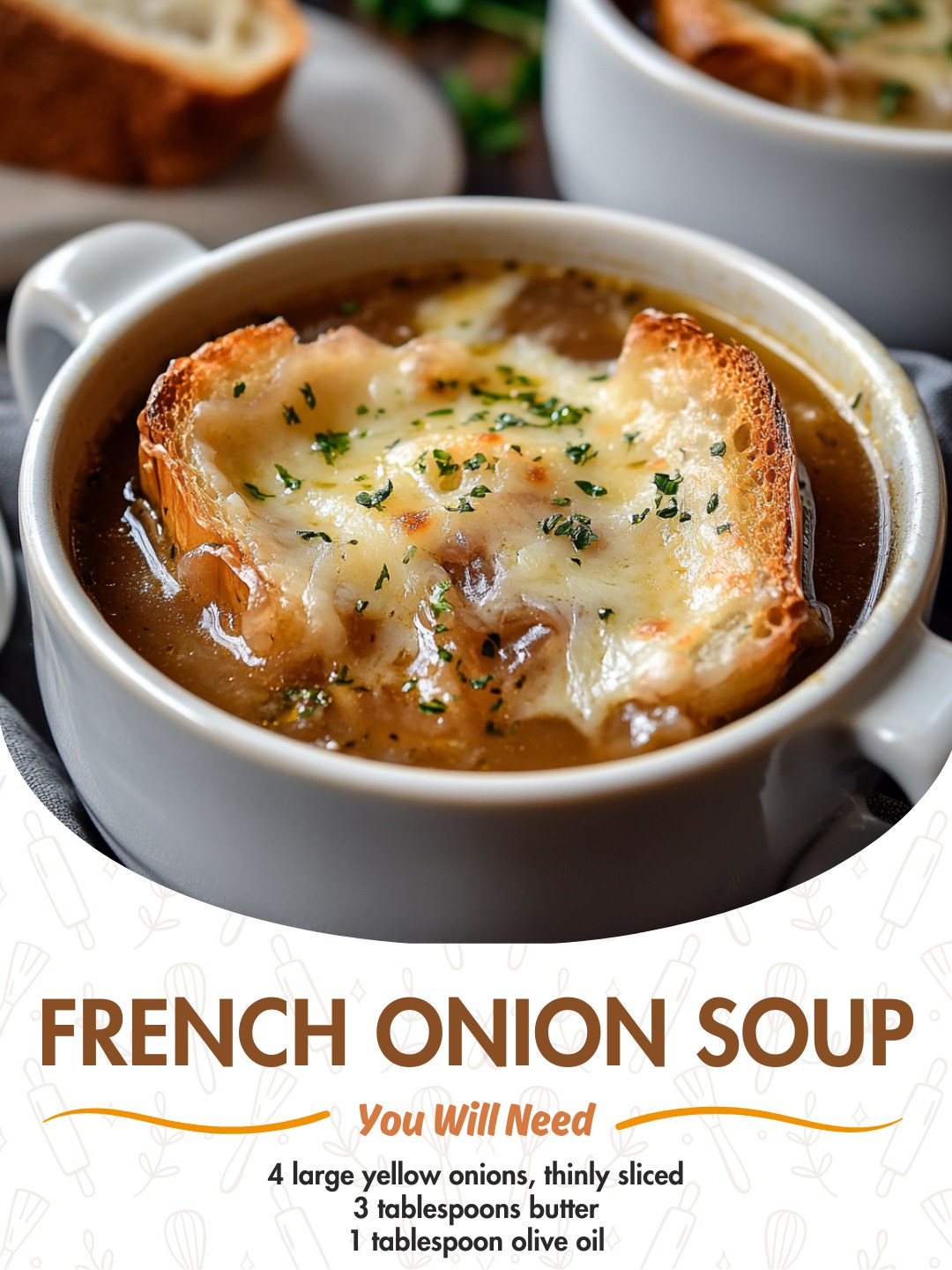
Introduction:
it’s less a “quick soup” and more a small culinary ceremony. The heart of the dish is not the stock, not the cheese, and not the
crouton. The heart is the onion—patiently cooked until it transforms from sharp and watery to sweet, amber, and deeply savory.
That transformation is governed by a set of practical kitchen “regulations,” the kind of rules that turn a decent pot of soup into a
bowl that tastes like a Paris bistro on a cold night.
When you follow these regulations, the soup becomes balanced and layered: a broth that tastes round rather than flat, onions that are
jammy rather than burnt, and a gratinée top that stretches and crackles in all the right ways. When you ignore them—rushing the onions,
under-seasoning the broth, or drowning everything in cheese without structure—you still get soup, but it won’t have that
unmistakable French onion character.
This article is built as a practical guide. Think of it as a “rulebook” for making French Onion Soup from scratch:
which ingredients matter most, how to execute each step with confidence, how to store it without losing quality, and how to tweak it
without breaking what makes it classic. By the end, you’ll have a dependable blueprint for a soup that’s glossy, aromatic,
and crowned with a golden layer of melted cheese.
Ingredients:
The ingredient list for French Onion Soup is short, which means every choice counts. These are the core components and what each one
contributes to the final bowl.
Onions (the main regulation: choose for sweetness and structure)
- Yellow onions: 900 g to 1.1 kg (2 to 2.5 lb), thinly sliced
- Optional blend: You can replace up to 25% with sweet onions for extra softness and sweetness
Yellow onions are the classic choice because they strike the best balance: enough natural sugar to caramelize beautifully, but enough
structure to hold up after long cooking. A small portion of sweet onions can be lovely, but using only sweet onions can make the soup
taste one-dimensional and overly sweet.
Fat and aromatics (the regulation: build flavor without scorching)
- Butter: 3 tablespoons
- Olive oil: 1 tablespoon
- Garlic: 2 cloves, minced (optional but recommended)
Butter delivers the classic rich flavor, while a small amount of olive oil raises the smoke point, reducing the chance of burning.
Garlic is not always traditional, but a little can add warmth and depth—think of it as a supportive note, not the main melody.
Liquid base (the regulation: broth quality is non-negotiable)
- Beef stock: 1.5 L (6 cups), low-sodium if possible
- Optional mix: Half beef + half chicken stock for a lighter, cleaner finish
- Dry white wine: 120 ml (1/2 cup), optional but highly recommended
Stock is the stage on which the caramelized onions perform. If the stock is weak, the soup tastes thin.
If the stock is salty, your seasoning control disappears. Low-sodium stock gives you power to adjust precisely.
Wine is not just “fancy”; it supplies acidity that brightens the sweetness of onions and helps dissolve browned bits from the pot.
