
- Salt: 1 teaspoon to start (adjust later)
- Black pepper: 1/2 teaspoon
- Thyme: 1 to 2 teaspoons fresh (or 1/2 teaspoon dried)
- Bay leaf: 1
- Flour: 1 tablespoon (optional, for slightly thicker body)
- Sugar: 1/2 teaspoon (optional, only if onions refuse to brown)
- Sherry or brandy: 1 tablespoon (optional, for depth at the end)
Thyme and bay leaf give the soup that unmistakable herbal backbone. Flour is optional, and your “regulation” here is restraint:
use it only if you want a broth with a gentle, velvety body. Sugar is a tool, not a default ingredient—use it only if your onions are
stubbornly pale after significant cooking time.
Gratinée topping (the regulation: bread must be sturdy, cheese must melt well)
- Baguette: 8 to 10 slices, toasted
- Gruyère: 200 to 250 g (2 to 2.5 cups), shredded
- Optional Parmesan: 2 tablespoons, for extra browning and nuttiness
A thin, soft slice of bread dissolves too quickly, turning the top into mush. Toasted baguette creates a barrier that stays pleasantly
chewy while soaking up just enough broth. Gruyère is the classic cheese because it melts smoothly and browns beautifully.
Parmesan can be added for a sharper, nuttier finish.
Instructions:
French Onion Soup is essentially a sequence of controlled transformations. Follow the regulations below, and you’ll get deep flavor
without bitterness, plus a broth that tastes complete rather than “onion water with cheese.”
1) Slice onions evenly (regulation: uniform slices cook uniformly)
Thinly slice onions into half-moons of similar thickness. Aim for slices that are thin enough to soften thoroughly, but not so thin
that they collapse into paste. Evenness matters: it prevents some pieces from burning while others remain pale.
2) Start low and steady (regulation: caramelization is time, not heat)
In a heavy-bottom pot or Dutch oven, melt butter with olive oil over medium heat. Add the onions and 1 teaspoon of salt. Stir to coat.
Reduce heat to medium-low and cook, stirring every few minutes, for 10 to 15 minutes until onions begin to soften and release liquid.
3) Caramelize properly (regulation: deep amber, not dark brown-black)
Continue cooking 30 to 45 minutes, stirring more frequently as the onions darken. You want a deep golden-amber color, like polished
copper. If the onions stick, scrape and stir. If you see browned bits on the bottom, that’s good—just ensure they are brown, not burnt.
If the pot is scorching, lower the heat. If the onions are pale after a long time, you may add 1/2 teaspoon sugar, but treat it as
optional.
This step is the soul of the soup. Rushing it yields sweetness without depth. Overcooking yields bitterness. The correct target is
onions that smell sweet and savory at once, with a jammy texture that still shows strands.
4) Add garlic and optional flour (regulation: avoid raw flour taste)
Stir in minced garlic and cook 30 seconds until fragrant. If using flour, sprinkle it over the onions and stir for 1 to 2 minutes.
This brief cook removes raw flour flavor and helps the soup develop a gentle body.
5) Deglaze with wine (regulation: dissolve flavor, don’t lose it)
Pour in the white wine. Scrape the bottom of the pot with a wooden spoon to dissolve the browned bits into the liquid.
Simmer 2 to 3 minutes to reduce slightly and cook off harsh alcohol notes. This step brightens the soup and ensures your caramelized
flavor becomes part of the broth rather than stuck to the pot.
6) Add stock and aromatics (regulation: simmer, don’t boil violently)
Add beef stock, thyme, and bay leaf. Bring to a gentle simmer. Do not boil aggressively, which can make the broth taste harsh and
can over-reduce too quickly. Simmer 20 to 30 minutes to let the flavors meld. Taste near the end and adjust salt and pepper gradually.
Remove the bay leaf before serving.
7) Toast the bread (regulation: crisp bread prevents a soggy top)
While the soup simmers, toast baguette slices until crisp and dry—either in a toaster oven, under a broiler, or in a hot oven.
The goal is sturdy toast that can float and support melted cheese.
8) Assemble and broil (regulation: safe broiling and proper melt)
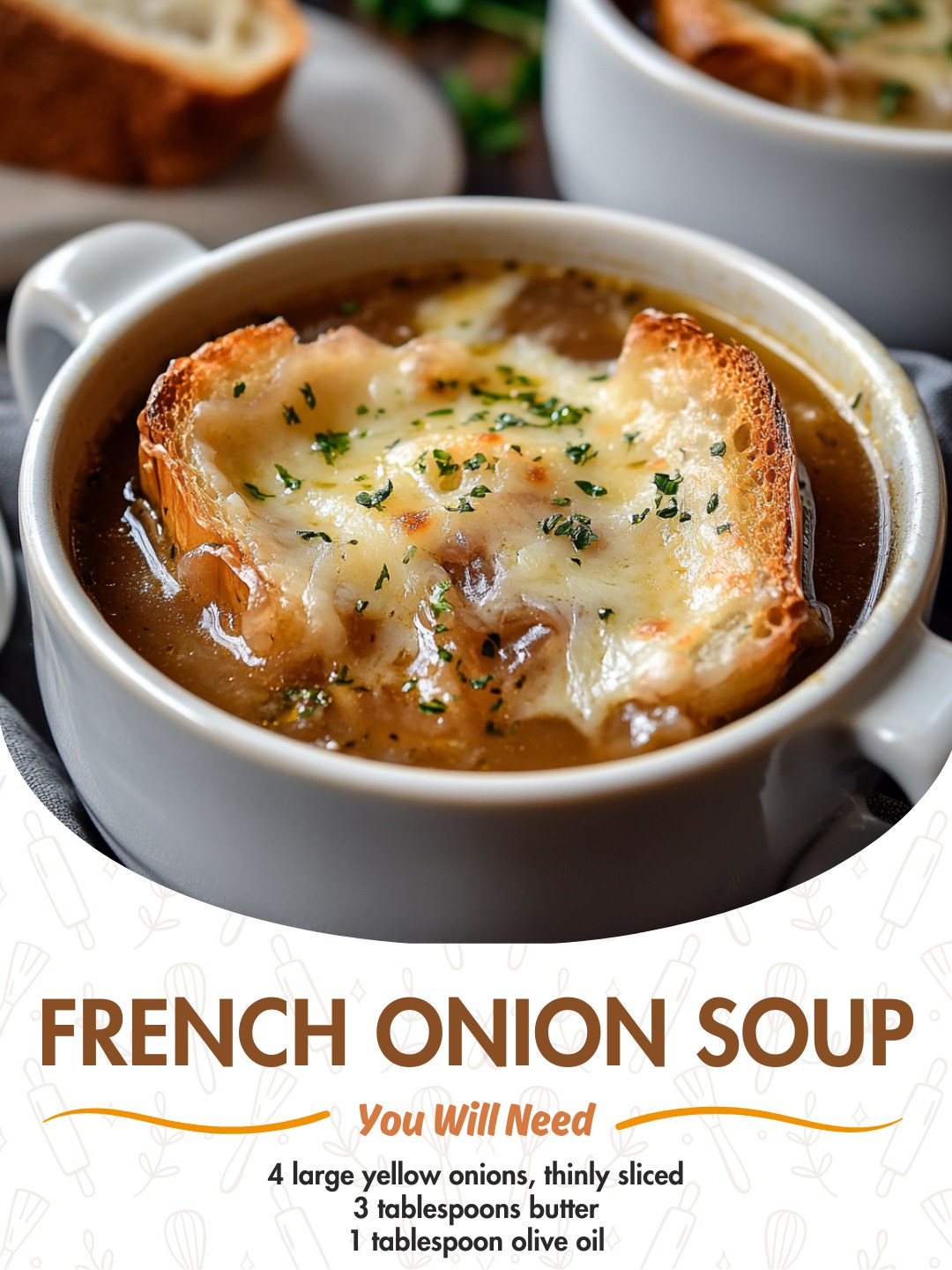
Ladle hot soup into oven-safe crocks on a baking sheet. Top each with 1 to 2 toasted baguette slices, then a generous mound of shredded
Gruyère. Add a sprinkle of Parmesan if desired. Broil 1 to 3 minutes until the cheese bubbles and browns at the edges.
Watch closely—broilers can turn perfect into burnt in seconds.
9) Finish with optional sherry (regulation: a small finish can deepen flavor)
If you enjoy a deeper, restaurant-style finish, stir a small splash of sherry or brandy into the pot of soup right before serving
(or add a few drops per bowl). Keep it subtle—this is a background note, not a headline.
Serving and Storage:
French Onion Soup is at its best when the broth is hot, the cheese is freshly melted, and the bread still has structure.
That said, it stores surprisingly well if you follow a few practical regulations.
Serving
- Serve immediately after broiling to preserve the gooey cheese top and the toasty bread texture.
- Use a baking sheet under crocks for stability and easier broiling.
- Let it rest 1 to 2 minutes after broiling—cheese and broth retain intense heat.
Storage (best practice: store soup and toppings separately)
Store the soup base (onions + broth) in an airtight container in the refrigerator for up to 4 days.
Keep bread and cheese separate. When you want a bowl, reheat the soup until steaming, then add toast and cheese and broil fresh.
This preserves texture and prevents the bread from dissolving in storage.
Freezing
The soup base freezes well for up to 2 to 3 months. Freeze only the broth-and-onion portion.
Thaw overnight in the refrigerator and reheat gently on the stove. Avoid freezing with bread or cheese already added.
Reheating
- Stovetop: Reheat over medium-low heat until simmering, stirring occasionally.
- Microwave: Heat in intervals, stirring between, until very hot.
- Re-gratinée: Add toast and cheese, then broil until bubbly for the classic finish.
Tips:
This first tips section focuses on the “regulations” that most strongly control flavor and texture—think of them as your
non-negotiable standards.
Regulation 1: Use a heavy pot
Thin pots create hot spots that burn onions. A Dutch oven or heavy-bottom stockpot distributes heat evenly and gives you more control,
which matters during a long caramelization.
Regulation 2: Stir strategically, not constantly
Onions need contact with the pot to brown, but they also need movement to avoid scorching. Stir every few minutes early on; later,
when onions are darker, stir more frequently. Your nose is a guide: sweet and nutty is good; sharp or burnt is a warning.
Regulation 3: Season in layers
Salt at the beginning helps onions release water and soften. Final seasoning should happen after simmering, because reduction and stock
salinity can change the balance. Taste and adjust gradually.
Regulation 4: Add acidity to balance sweetness
Caramelized onions are naturally sweet. Wine (and sometimes a tiny touch of sherry at the end) prevents the soup from tasting heavy or
candy-like. If you skip wine, consider a small splash of vinegar or lemon—used carefully—just to brighten.
Regulation 5: Toast the bread thoroughly
The bread should be dry and crisp before it meets the soup. This is what allows it to float and support cheese without instantly
dissolving. A slightly thicker slice is usually better than a thin one.
Regulation 6: Broil safely and watch closely
Place crocks on a baking sheet. Position the oven rack so the cheese browns without burning. Never walk away from the broiler—most
disasters happen in under a minute.
Variations:
French Onion Soup has a classic profile, but it’s also flexible. The key regulation for variations is this:
change one element at a time so you maintain balance. Here are reliable twists that still respect the soul of the dish.
1) Lighter “everyday” version
Use a 50/50 blend of beef and chicken stock. The soup remains rich but feels cleaner and less heavy. This version is especially good
if you plan to serve it with other hearty dishes.
2) Deep and bold version
Add a small splash of brandy after caramelizing onions (before stock), and finish with a teaspoon of sherry at the end.
Keep amounts modest to avoid turning the soup into an alcohol-forward stew.
3) Herb-forward version
Add a small rosemary sprig during simmering (remove before serving) alongside thyme. Rosemary is potent, so treat it like perfume:
a little creates elegance; too much overwhelms.
4) Cheese swap options
- Comté: similar to Gruyère, slightly sweeter and very melty
- Swiss: mild and accessible, though less complex than Gruyère
- Mozzarella + Parmesan: more stretch, less nuttiness; parmesan helps browning
5) Gluten-free approach
Skip flour or replace with a gluten-free thickener (used sparingly). Use gluten-free bread or a toasted slice of polenta as the base
for the cheese. You can still achieve a beautiful gratinée top.
6) Vegetarian version (structure matters)
Use a high-quality vegetable stock and add umami support: a few dried mushrooms simmered in the broth (removed before serving),
or a small amount of miso stirred in off heat. The regulation is balance—don’t make it taste like mushroom soup; aim for depth.
Tips:
This second tips section is dedicated to troubleshooting and workflow—what to do when something goes wrong and how to make the process
easier without sacrificing quality.
If your onions are burning
Lower the heat immediately and add a splash of water to loosen the bottom of the pot. Scrape up browned bits and keep stirring.
Burning usually means too much heat or not enough stirring at the darker stages.
If your onions won’t brown
First, be patient—proper caramelization takes time. Increase heat slightly and ensure moisture is evaporating. If onions are steaming,
your pot may be overcrowded or covered. Keep the pot uncovered and stir occasionally. As a last resort, add a tiny pinch of sugar.
If the soup tastes flat
Flatness usually means missing salt, missing acidity, or weak stock. Add salt gradually, then add a splash of wine, sherry,
or a few drops of vinegar. If stock is weak, reduce the soup slightly to concentrate flavor.
If the soup tastes too sweet
Add acidity (wine, sherry, a few drops of vinegar) and a bit more salt. Sweetness needs contrast. Also, ensure you used enough pepper
and herbs to provide backbone.
If the top becomes soggy
This is usually a bread issue. Toast bread longer and use thicker slices. Also, assemble and broil right before serving rather than
letting bowls sit.
Make it less time-consuming
Caramelize onions in advance. You can cook a large batch, refrigerate them for up to 4 days, and then make soup quickly by adding stock
and simmering. The “regulation” here is simple: never rush the caramelization, but feel free to move it to an earlier day.
Conclusion:
French Onion Soup is not difficult because it requires complicated technique; it’s difficult because it asks for patience and attention.
The regulations are straightforward: caramelize onions slowly to deep amber, deglaze properly, use good stock, season in layers,
and finish with toasted bread and a cheese that melts and browns beautifully. Follow those rules and your soup becomes more than the
sum of its parts—sweet, savory, glossy, aromatic, and crowned with that signature gratinée top.
Once you master the rules, you gain freedom. You can choose a lighter broth blend, add a subtle splash of sherry, experiment with cheeses,
or prep onions ahead for easier weeknight cooking. No matter how you personalize it, the “golden rules” keep the soup anchored in what
makes it timeless: transformation through heat, balance through seasoning, and comfort through texture.
FAQ:
How long should I caramelize the onions?
Plan for 40 to 60 minutes depending on your heat, pot, and onion quantity. You’re aiming for deep amber onions that smell
sweet and savory, not pale and watery and not bitterly burnt.
Do I have to use wine?
No, but it helps a lot. Wine provides acidity and lifts flavor from the pot. If you avoid wine, use a small splash of vinegar or lemon
very carefully—just enough to brighten, not enough to taste sour.
What if I don’t have oven-safe crocks?
You can broil the toast and cheese separately on a baking sheet, then place the cheesy toast on top of each bowl of soup. It’s not
identical to the classic crock method, but the flavor and experience are still excellent.
Why does my soup taste bitter?
Bitterness almost always comes from onions or pot drippings that became burnt rather than browned. Burnt is black and acrid;
browned is deep golden-brown and nutty. Reduce heat, stir more often, and deglaze with small splashes of water if needed during cooking.
Can I make it ahead for guests?
Yes. Make the soup base (onions + broth) ahead and reheat before serving. Toast bread and grate cheese ahead too. Right before serving,
assemble bowls and broil for the freshest gratinée top.
What’s the best cheese if I can’t find Gruyère?
Comté is the closest match. Swiss is a common substitute. A mix of mozzarella (for stretch) plus Parmesan (for browning and nuttiness)
also works if you want something more accessible.
Can I thicken French Onion Soup?
Traditionally it’s more broth-like, but you can lightly thicken it. The simplest method is 1 tablespoon flour cooked briefly with the
onions before adding wine and stock. Use a light hand—too much thickener can make the soup feel heavy.
How do I keep the bread from sinking?
Toast it thoroughly and use slightly thicker slices. Some sinking is normal, but good toast plus a generous cheese layer creates a
floating “cap” that holds up well.
Is it safe to broil ceramic bowls?
Use only bowls labeled oven-safe/broiler-safe. Place them on a baking sheet and avoid thermal shock (don’t take a cold bowl straight
into a blazing broiler). When in doubt, broil the cheesy toast separately and add it to the soup.