
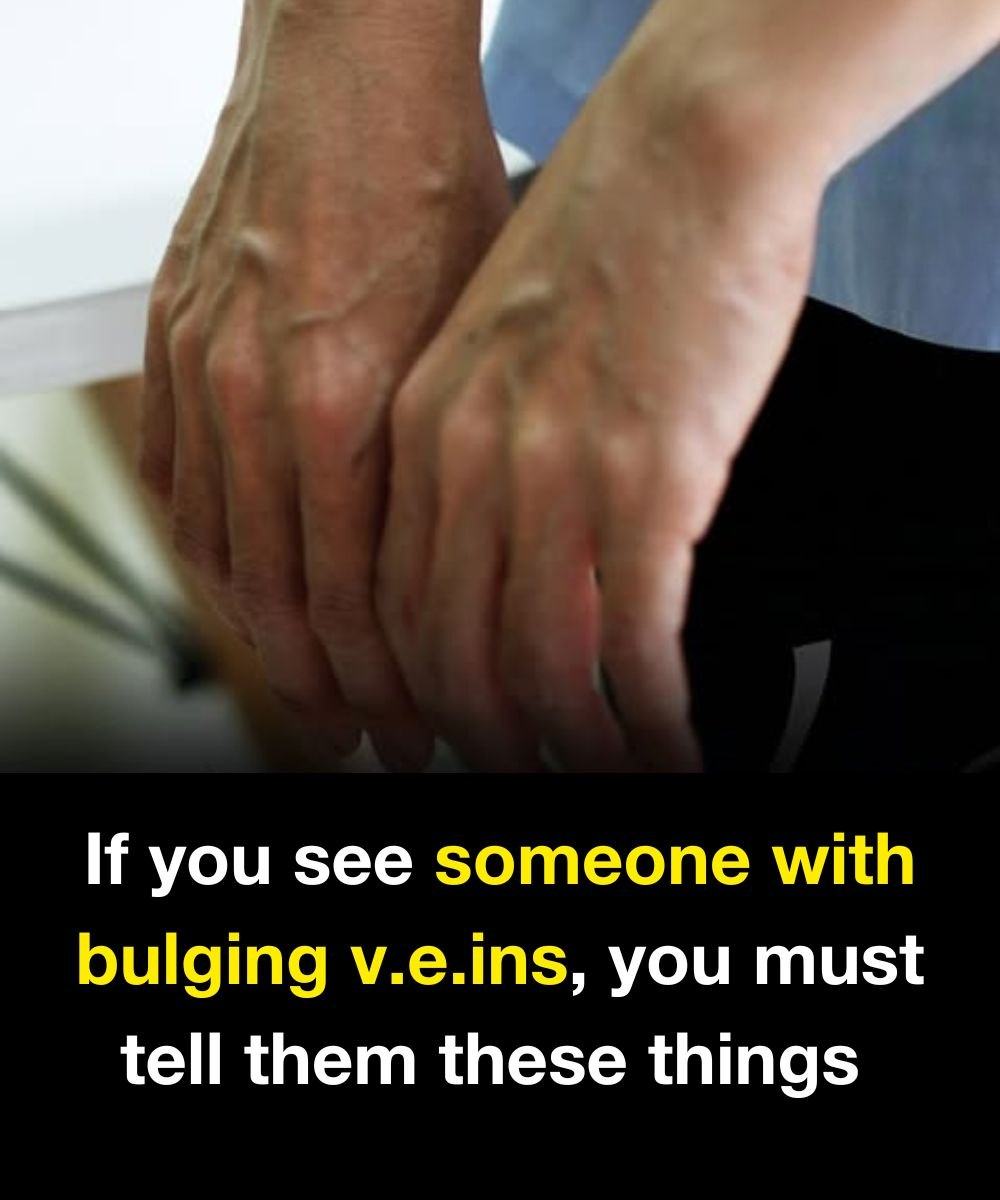
Bulging or enlarged veins are extremely common — especially on the hands, arms, and legs. Many people assume they’re just a sign of aging or exercise, but bulging veins can sometimes reveal important information about circulation and vascular health.
If you notice someone with veins that appear unusually enlarged, twisted, or raised, here are the key things they should know.
⭐ 1. Bulging Veins Are Often Normal — Especially in These Cases
✔ Low body fat
People with low body fat naturally show more visible veins, especially in the hands and forearms.
✔ Exercise or lifting weights
During physical activity, blood flow increases, making veins swell temporarily.
✔ Heat exposure
Hot weather causes veins to expand, making them appear more prominent.
✔ Age
As skin thins and loses elasticity, veins become easier to see.
These normal causes usually don’t require treatment.
⭐ 2. But Sometimes Bulging Veins Signal an Underlying Circulation Issue
This is where awareness becomes important. Bulging veins can be linked to:
⚠ Varicose Veins
Twisted, enlarged veins — often in the legs — caused by weakened vein valves.
⚠ Chronic Venous Insufficiency (CVI)
A condition where blood struggles to return to the heart, leading to swelling, pain, and heaviness.
⚠ Deep Vein Thrombosis (DVT)
A possible serious condition where a clot forms in a deep vein.
While DVT does not always cause bulging veins, sudden vein changes should never be ignored.
⚠ Hormonal changes
Common during pregnancy or menopause.
⚠ Vascular inflammation
Inflammed veins (phlebitis) can cause visible enlargement.
If someone suddenly develops bulging veins or they come with symptoms, they should monitor closely.
⭐ 3. Warning Signs That Should NOT Be Ignored
If bulging veins appear along with these symptoms, medical attention is advised:
-
Leg swelling or heaviness
-
Pain or tenderness
-
Skin discoloration (blue/purple/dark patches)
-
Warmth around the vein
-
Veins becoming hard or rope-like
-
Sudden appearance of many enlarged veins
-
Shortness of breath or chest pain (emergency!)
These could indicate a circulation issue or blood clot risk.
