
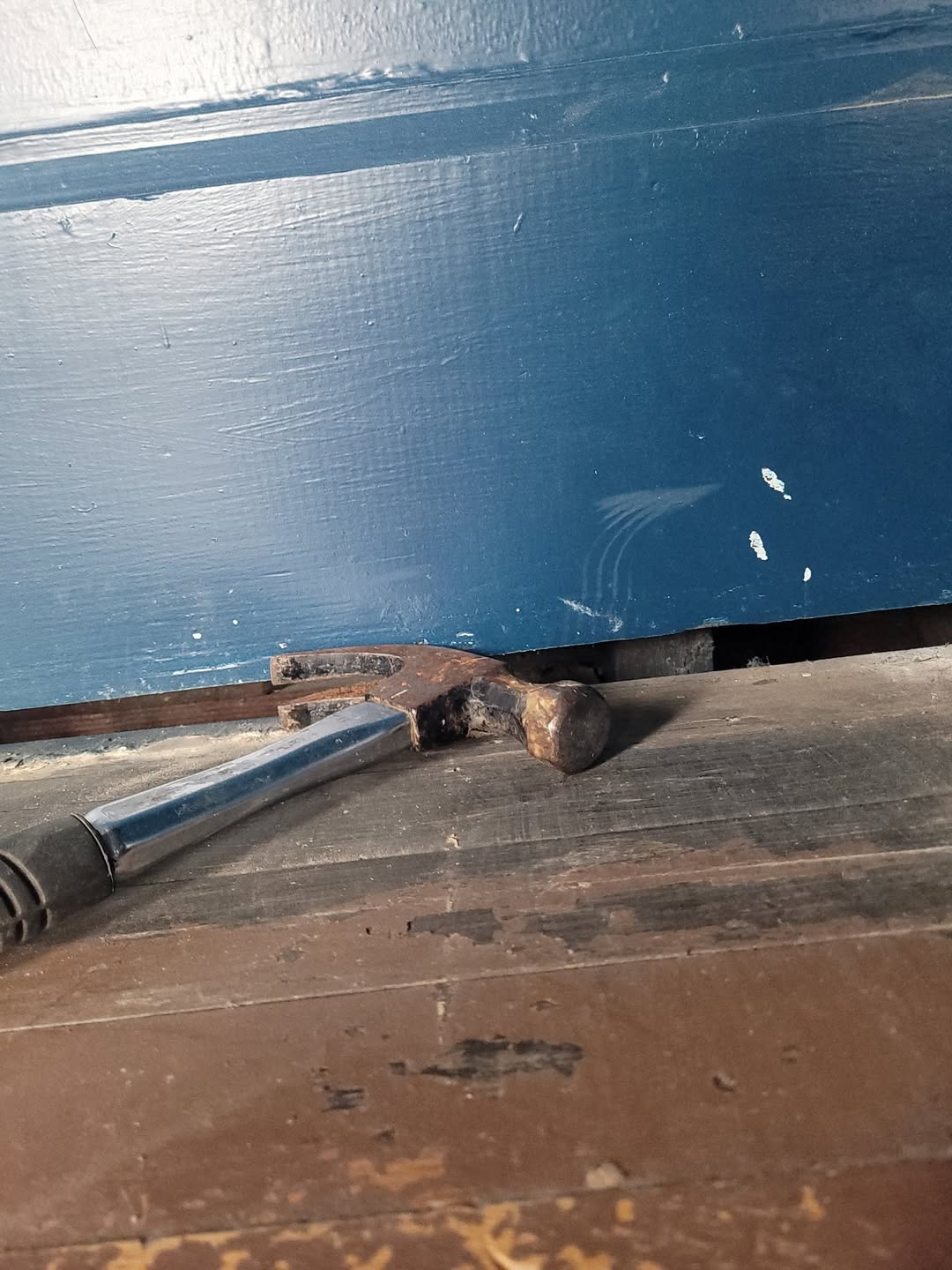
Removing old carpet, tile, or underlayment to reveal beautiful hardwood floors is a satisfying renovation move — but it often leaves behind one annoying issue: a visible gap between the baseboard and the newly exposed floor.
In this photo, you can clearly see a rough 1-inch gap where the baseboard now sits slightly above the hardwood, likely because it was originally installed over thicker layers like carpet padding or tile backer.
So what can you do to close that gap and make your floor look polished again? Here’s a detailed guide:
Why the Gap Happens
Most baseboards are installed after carpet or tile is laid, meaning they’re positioned to rest on top of the finished flooring height. When that layer is removed, you’re left with:
-
A visible vertical gap (½ to 1 inch or more)
-
Exposed subfloor or wall behind the baseboard
-
Gaps that can collect dust or feel drafty
✅ 5 Solutions to Fill the Gap Between Floor and Baseboard
1. Add Shoe Molding or Quarter Round
This is the most popular and elegant fix.
How to do it:
-
Measure the length of the gap
-
Purchase wood or MDF shoe molding (¾” standard)
-
Cut to size and use a miter saw for corners
-
Nail into the baseboard (not the floor) with finishing nails
-
Caulk and paint to match the baseboard
Pros: Easy, affordable, and adds a classic look
Cons: Still may show minor gap if it exceeds 1 inch
2. Install Taller Baseboards
If the gap is large or you want a modern refresh, consider removing the current baseboards and installing taller ones.
How to do it:
-
Pry off old baseboards carefully
-
Measure and cut new, taller baseboard trim (5–7 inches)
-
Install flush to floor with adhesive and finish nails
ADVERTISEMENT
