
-
Forks: tines up
-
Spoons: alternate up and down to avoid “spoon nesting”
-
Knives: blades down for safety
Mix utensils to keep them from sticking together.
✔ 5. Don’t stack bowls in the same direction
Bowls often trap water when stacked too closely.
Alternate directions or space them well to improve cleaning.
✔ 6. Top rack is for lighter items
Such as:
-
Glasses
-
Mugs
-
Plastic food containers
-
Small bowls
Place them at an angle to help water drain off.
✔ 7. Check that the spray arms rotate freely
Before starting the cycle, manually spin the spray arms to ensure nothing blocks their movement.
Bonus Tips for Cleaner Dishes Every Time
🔸 Use less detergent — not more.
Modern dishwashers and detergents are high-efficiency. Too much soap creates residue.
🔸 Use hot water cycles.
Optimal cleaning happens at 120°F to 150°F (49°C to 65°C).
🔸 Run the dishwasher only when full — but not overcrowded.
🔸 Clean the filter every 2–3 weeks.
Food buildup reduces cleaning power dramatically.
Why Following These Tips Makes a Huge Difference
Proper loading ensures:
-
Cleaner dishes on the first wash
-
Less need for rewashing
-
Lower water and energy bills
-
A longer-lasting dishwasher
-
Better detergent performance
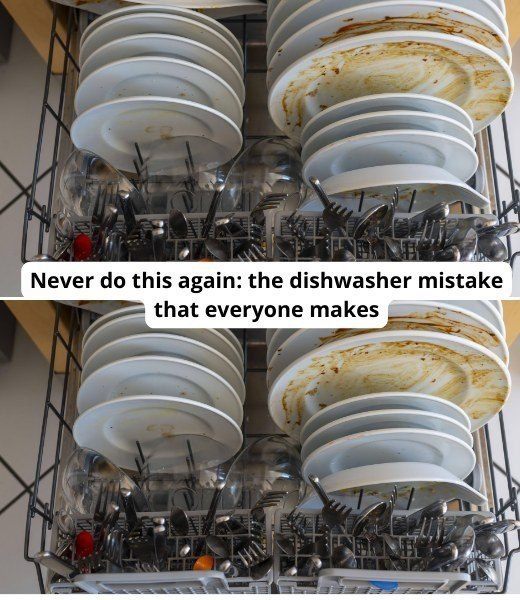
By eliminating this common mistake — blocking the spray arms — you’ll instantly improve your dishwasher efficiency and get spotless results every time.
Final Thoughts
Using a dishwasher should make life easier, not harder. A few simple adjustments to how you load it can save time, energy, and frustration. Once you understand how the spray arms distribute water, everything about loading starts to make sense.
Next time you run your dishwasher, remember:
👉 If the water can’t reach it, it won’t get clean.