
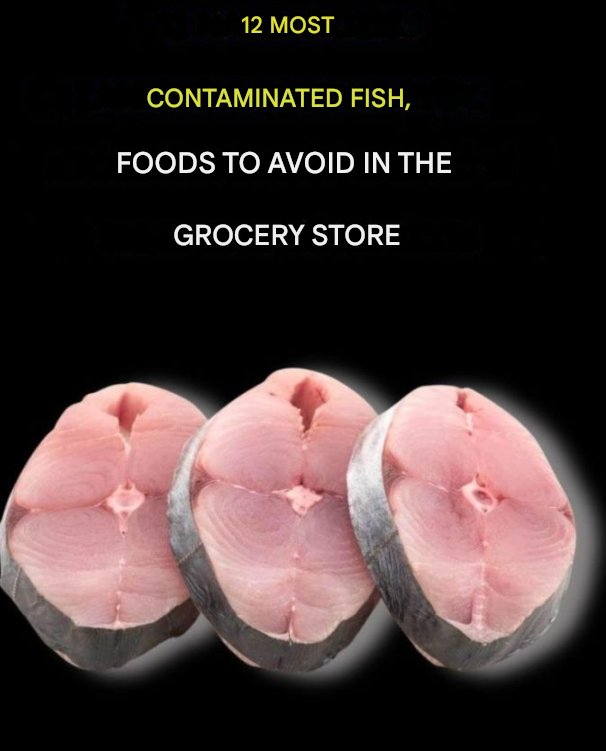
A science-based guide to safer seafood choices for your health and your family
Fish is often praised as a nutritional powerhouse—rich in protein, omega-3 fatty acids, and essential minerals. However, not all fish are created equal. Some species accumulate dangerous levels of mercury, PCBs, dioxins, pesticides, and microplastics, making them risky when consumed regularly.
This article explains why certain fish are more contaminated, lists the 12 most contaminated fish you should avoid or strictly limit, and shows you healthier seafood alternatives you can confidently buy at the grocery store.
Why Some Fish Are More Contaminated Than Others
Fish contamination mainly happens due to bioaccumulation and biomagnification:
-
Bioaccumulation: Fish absorb toxins from polluted water over time.
-
Biomagnification: Large predator fish eat many smaller fish, concentrating toxins in their bodies.
The older, larger, and longer-living the fish, the higher its contamination level tends to be.
The most common toxins found in contaminated fish include:
-
Mercury (damages brain and nervous system)
-
PCBs (polychlorinated biphenyls) (linked to cancer and hormonal disruption)
-
Dioxins (toxic even at low levels)
-
Pesticides
-
Microplastics
Why This Matters for Your Health
Regular consumption of highly contaminated fish has been linked to:
-
Memory loss and cognitive decline
-
Increased dementia risk
-
Developmental delays in children
-
Hormonal imbalance
-
Cardiovascular disease
-
Immune system suppression
⚠️ Pregnant women, children, older adults, and people with chronic conditions are especially vulnerable.
The 12 Most Contaminated Fish to Avoid
1. Shark
-
Extremely high in mercury
-
Long lifespan = heavy toxin buildup
Avoid completely, especially during pregnancy.
2. Swordfish
-
One of the highest mercury levels of all seafood
-
Frequently flagged by FDA and EPA
Do not eat regularly.
3. King Mackerel
-
Not the same as Atlantic mackerel
-
High mercury and PCB levels
Avoid entirely.
