
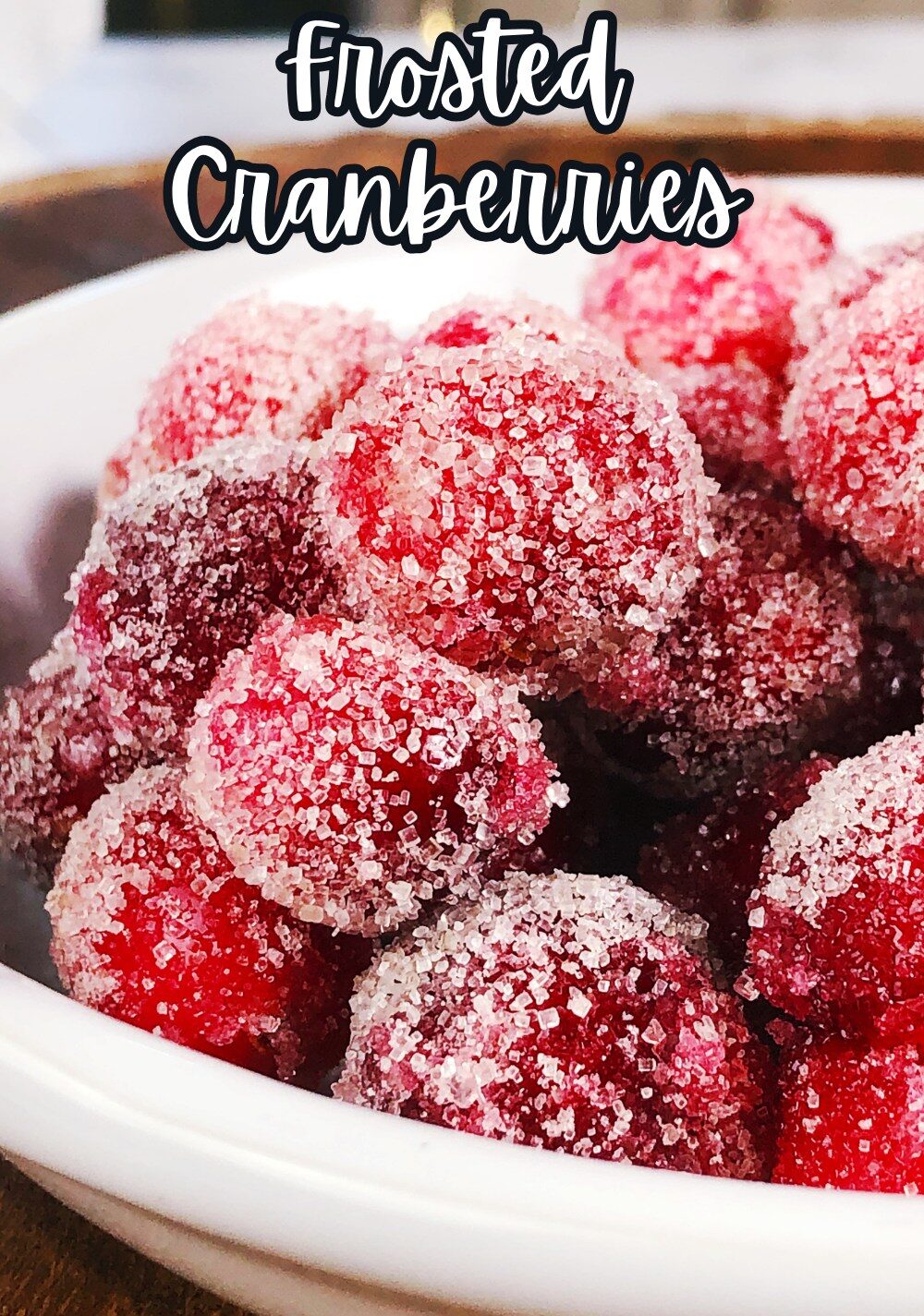
The magic step is letting the syrup-coated cranberries dry until sticky before rolling in sugar.
If you roll them too soon (while wet), the sugar dissolves and turns syrupy.
If you wait until they’re not sticky enough, the sugar doesn’t cling.
You’re aiming for that perfect middle stage: sticky, tacky berries that grab onto sugar like glue.
Ingredients (3 Total)
For the cranberries
-
2 cups fresh cranberries (about 12 oz / 340 g), rinsed and well dried
Fresh is best. Frozen cranberries can work, but they often get soft and weepy when thawed, making it harder for sugar to stick cleanly.
For the simple syrup
-
1/2 cup water
-
1/2 cup granulated sugar
For coating
-
1 cup granulated sugar (or more as needed)
Optional upgrades (not required, but fun):
-
Coarse sugar for extra sparkle and crunch
-
Orange zest or a tiny splash of vanilla in the syrup for flavor
-
A sprig of rosemary for decoration (not edible for everyone, but super pretty)
Tools You’ll Need
-
Small saucepan
-
Mixing bowl
-
Slotted spoon (or spider strainer)
-
Wire rack (best) or parchment paper
-
Baking sheet or tray to catch drips
-
A clean bowl for rolling sugar
Step-by-Step Recipe (With Pro-Level Detail)
Step 1: Rinse and Dry the Cranberries
-
Rinse cranberries under cool water.
-
Pick out any shriveled or soft berries.
-
Pat the cranberries very dry with paper towels.
Why this matters: Extra surface water dilutes the syrup and delays the sticky stage you need later.
Step 2: Make the Simple Syrup
-
In a small saucepan, combine 1/2 cup water and 1/2 cup sugar.
-
Heat over medium, stirring, until the sugar fully dissolves and the mixture turns clear.
-
Remove from heat and let cool for about 5 minutes.
Important: You do not need a long boil. Over-boiling can thicken the syrup too much, making uneven clumps and heavy coating.
Step 3: Coat the Cranberries in Syrup
-
Place cranberries in a medium bowl.
-
Pour the warm (not boiling hot) syrup over them.
-
Stir gently until every berry looks glossy.
What you’re doing here: Creating a thin, sticky layer that will act like edible glue for the sugar crystals.
Step 4: Drain and Dry Until Sticky
-
Use a slotted spoon to lift cranberries out of the syrup.
-
Place them on a wire rack set over a baking sheet. (Or place on parchment if you don’t have a rack.)
Let them dry at least 1 hour, sometimes up to 2 hours depending on humidity.
How to tell they’re ready: Touch one cranberry lightly. It should feel tacky and sticky, not wet and dripping.
Why the rack helps: Air circulates around the berries so they dry evenly and don’t pool in syrup underneath.
Step 5: Roll in Sugar (The Frosting Moment)
-
Pour 1 cup sugar into a clean bowl.
-
Add a handful of sticky cranberries.
-
Roll/toss gently until fully coated.
-
Transfer to parchment paper in a single layer.
If your sugar starts clumping from moisture, swap it out for fresh sugar.
Pro sparkle tip: For the “Pinterest look,” use coarse sugar or a 50/50 mix of coarse + regular.
Step 6: Let Them Set and Crisp
Let the sugared cranberries sit at room temperature for 30–60 minutes so the sugar shell firms up and dries.
Once set, they’ll look frosty and feel lightly crunchy on the outside.
How to Use Frosted Cranberries (So Many Holiday Wins)
Dessert decorating
-
Cheesecakes: Scatter on top with rosemary sprigs for a winter look.
-
Chocolate cake: The tart cranberry cuts the richness perfectly.
-
Cupcakes: One frosted cranberry on each swirl of frosting = instant elegance.
-
Pies and tarts: Especially great on pumpkin pie, chocolate tart, or lemon tart.
Charcuterie & snack boards
They’re beautiful on boards with:
-
brie or goat cheese,
-
crackers,
-
dark chocolate,
-
orange slices,
-
nuts,
-
rosemary.
Drinks (cocktails or mocktails)
Use as a garnish for:
-
sparkling water with citrus,
-
cranberry spritzers,
-
holiday punches,
-
hot toddy or mulled drinks (serve berries on the side so they stay crisp).
Table decor (edible centerpiece magic)
Scatter a few frosted cranberries on a platter with rosemary and orange slices—your table looks styled without extra effort.
Flavor Variations (Optional, But Delicious)
1) Orange-Vanilla Frosted Cranberries
Add to the syrup:
-
1 tsp vanilla extract
-
1 tsp orange zest (or a thin orange peel strip you remove later)
Result: Less sharp, more “holiday bakery.”
2) Cinnamon “Spiced” Frosted Cranberries
Add to syrup:
-
1 small cinnamon stick (remove after syrup cools)
Optional: a tiny pinch of nutmeg.
Note: Don’t add ground cinnamon directly to coating sugar unless you want a speckled look.
3) Extra-Sparkly Coarse Sugar Cranberries
Coat with coarse sugar only (or mostly coarse sugar).
Result: Bigger crystals, maximum glitter effect.
4) Lemon-Frosted Cranberries
Add to syrup:
-
1 tsp lemon zest
Perfect for lemon desserts and lighter holiday tables.
Make-Ahead and Storage (Read This to Avoid Sticky Berries)
Best timing:
Frosted cranberries are at their sparkliest and crunchiest the day they’re made.
Short-term storage:
-
Store at cool room temperature in a single layer for up to 24 hours.
Why not the fridge?
The fridge is humid. Humidity makes sugar absorb moisture and turn sticky or dissolve. If you must refrigerate because your home is very warm, store them in a container with paper towels and expect a softer sugar shell.
Can you freeze frosted cranberries?
Not recommended. Freezing and thawing creates condensation, which melts the sugar coating.
Make-ahead strategy that works:
Make the syrup-coated cranberries and let them dry until sticky, then roll in sugar closer to serving time for best crunch and sparkle.
Troubleshooting (Fix Common Problems Fast)
“My sugar melted and turned syrupy.”
This usually happens if:
-
cranberries were still too wet when sugared, or
-
the room is very humid, or
-
you stored them covered while still warm/sticky.
Fix: Let the berries dry longer on the rack. Then roll again in fresh sugar.
“The sugar won’t stick.”
This happens if the berries dried too long and lost tackiness.
Fix: Toss them very lightly in a tiny bit of leftover syrup (or brush with syrup), then roll in sugar again.
“My sugar clumps in the bowl.”
That’s moisture from the berries.
Fix: Work in smaller batches and replace sugar once it clumps. Use a fork/strainer to shake off extra syrup before sugaring.
“They look frosty but feel wet.”
They need more drying time after sugaring.
Fix: Spread in a single layer and let sit longer at room temp.
Frequently Asked Questions
Can I use frozen cranberries?
You can, but thawed berries release moisture and soften, which can cause sugar to melt and slide off. Fresh cranberries give the best results.
Are frosted cranberries safe to eat?
Yes—this is simply fruit coated in sugar. (They are tart inside, so the sweet coating helps balance them.)
Do they taste very sweet?
They taste sweet-tart. The sugar shell is sweet, but the cranberry is naturally tangy, so it balances out rather than tasting like pure candy.
Can I use powdered sugar?
Not for this look. Powdered sugar dissolves quickly and won’t give that crystal sparkle.
Conclusion
Frosted cranberries are one of those rare holiday recipes that are effortless yet look completely professional. With just cranberries, sugar, and water, you can create a sparkling garnish that instantly upgrades desserts, drinks, and party boards. Follow the key rule—dry the syrup-coated cranberries until sticky—and you’ll get that signature snowy crunch every time. Make a batch for your next holiday table, and you’ll quickly see why these little ruby “snowballs” become a tradition.