
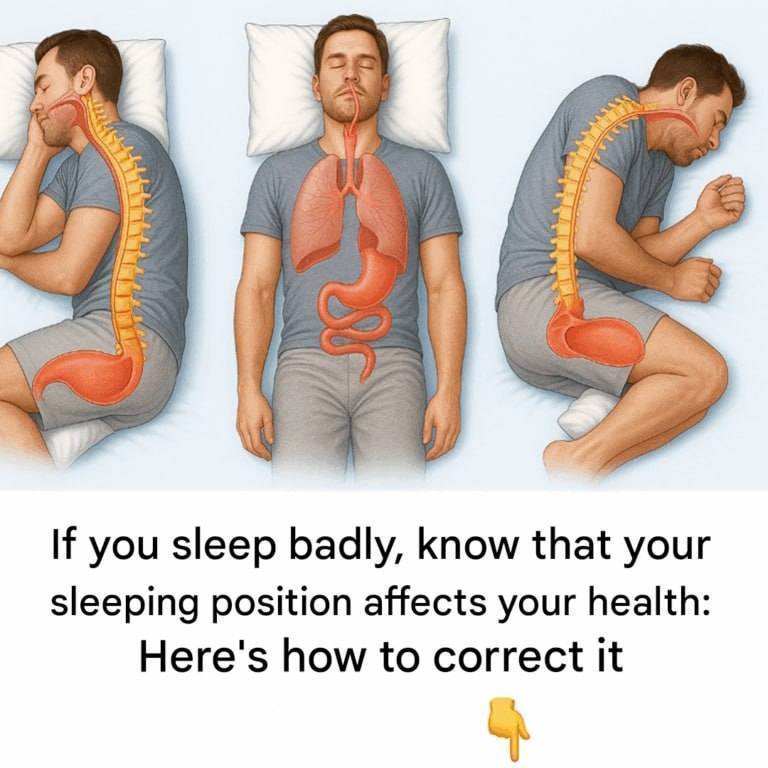
Most people underestimate how strongly their sleep position affects their overall health. We focus on sleeping more—but often ignore whether we’re sleeping correctly. Your posture during the night can influence your breathing, digestion, spine health, muscle tension, and even your mood when you wake up.
The truth is simple: how you sleep matters just as much as how long you sleep.
Below is a complete guide explaining how different sleep positions affect the body and how to correct common mistakes so you can wake up rested, pain-free, and energized.
🌙 Why Your Sleeping Position Matters
While you’re asleep, your body is busy repairing tissues, balancing hormones, and restoring energy. But if your posture compresses organs, strains your spine, blocks your airways, or keeps muscles tense, your body will struggle to recover.
This is why many people wake up with:
-
Neck pain
-
Back stiffness
-
Acid reflux
-
Headaches
-
Fatigue despite 7–8 hours of sleep
-
Numb arms or legs
The good news? Small adjustments in position can dramatically improve sleep quality.
🛏️ 1. Sleeping on Your Back (Supine Position)
✔ Best for:
-
Spine alignment
-
Reducing pressure on joints
-
Preventing facial wrinkles
-
Supporting neck posture
✘ Not ideal for:
-
Snorers
-
People with sleep apnea
-
Individuals prone to acid reflux
Why:
When lying flat on your back, gravity pulls your tongue backward, narrowing the airway. This can cause snoring or worsen apnea. It can also allow stomach acid to rise more easily.
✅ How to correct it:
-
Place a pillow under your knees to reduce lower-back strain
-
Use a medium-firm pillow to keep your neck aligned
-
If reflux is a problem, elevate the upper body slightly
🛏️ 2. Sleeping on Your Left Side (Recommended by Many Specialists)
✔ Best for:
-
Digestion
-
Reducing acid reflux
-
Improving circulation
-
Pregnancy support
-
Spine alignment when done properly
ADVERTISEMENT
