
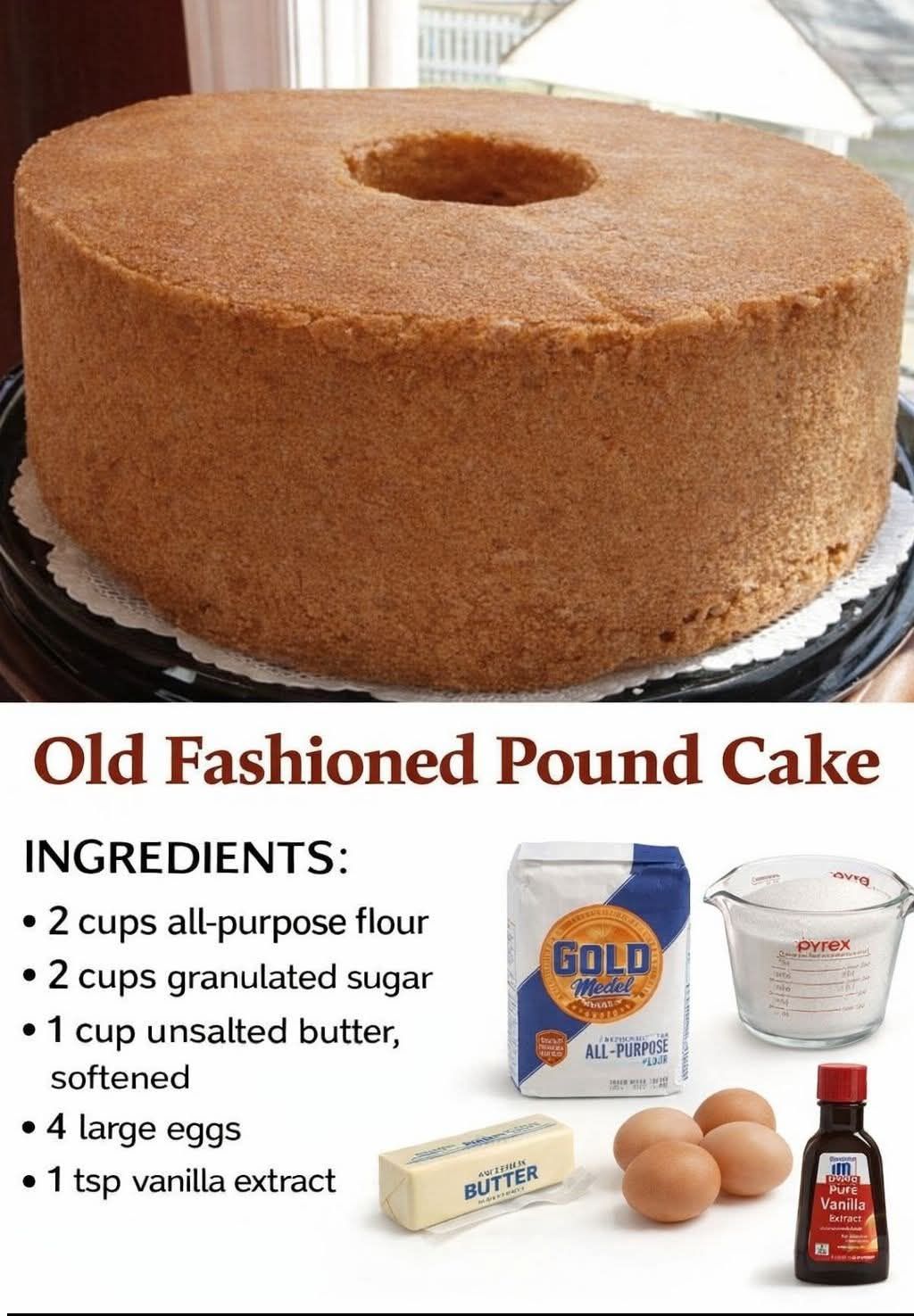
- Preheat oven to 325°F (165°C).
- Grease and flour a 10–12 cup bundt pan (or tube pan), making sure every crevice is coated.
- Optional: use baking spray with flour for extra insurance.
Pan regulation: Pound cake loves to stick—grease thoroughly or you’ll lose that beautiful crust.
2) Cream butter and sugar (do not rush)
- Beat butter on medium speed for 1 minute until smooth.
- Add sugar gradually and beat 5–7 minutes until very light and fluffy.
- Scrape bowl occasionally so everything creams evenly.
Creaming regulation: This step builds the cake’s structure and tender crumb. Most pound cake failures start here.
3) Add eggs slowly
- Add eggs one at a time, mixing well after each.
- After all eggs are added, mix in vanilla and almond extract (if using).
Egg regulation: Adding eggs gradually keeps the batter emulsified and prevents curdling.
4) Add dry ingredients + cream alternately
- In a separate bowl, whisk flour, salt, and baking powder (if using).
- With mixer on low, add flour mixture in 3 additions, alternating with cream in 2 additions (begin and end with flour).
- Mix just until combined. Stop as soon as you no longer see dry flour.
Gentle regulation: Overmixing after flour goes in can make the cake tough instead of velvety.
5) Bake low and slow
- Spoon batter into the prepared pan and smooth the top.
- Bake for 75–90 minutes, depending on your oven and pan.
- The cake is done when a tester comes out with a few moist crumbs (not wet batter), and the top is deep golden.
- If the top is browning too fast, tent loosely with foil for the last 20 minutes.
Doneness regulation: Overbaking dries pound cake. Pull it as soon as it tests done.
6) Cool and unmold at the right time
- Cool in the pan for 15 minutes.
- Invert onto a rack and let cool completely before slicing.
Unmold regulation: Too soon = breakage. Too late = sticking. 15 minutes is the sweet spot.
Serving and Storage
Serving
Serve at room temperature for the best buttery texture. Dust with powdered sugar or serve with strawberries and whipped cream.
You can also toast slices lightly and top with butter or jam—old-school and unbelievably good.
Storage
- Room temperature: wrap tightly and store for 3–4 days.
- Refrigerator: up to 6 days (bring to room temp before serving).
- Freezer: wrap whole cake or slices and freeze up to 2 months.
Reheating
Pound cake is best at room temperature, but you can warm slices for 8–10 seconds in the microwave or toast lightly for a crisp edge.
Tips
- Room-temp ingredients: smooth batter, better rise, even bake.
- Cream longer: butter + sugar should look fluffy and pale.
- Measure flour correctly: spoon into cup and level—don’t pack it.
- Don’t overmix: mix just until flour disappears.
- Use a thermometer if you want: internal temp near 200–205°F (93–96°C) is typical when done.
Variations
1) Lemon Cream Pound Cake
Add 2 tbsp lemon zest and replace 2 tbsp cream with lemon juice. Finish with a lemon glaze.
2) Sour Cream Pound Cake
Replace 1/2 cup cream with 1/2 cup sour cream for extra tang and moisture.
3) Vanilla Bean Pound Cake
Use vanilla bean paste or scrape 1 vanilla bean for deeper vanilla flavor.
4) Almond Pound Cake
Increase almond extract to 1 tsp (if you love almond) and top with sliced almonds.
5) Marble Cream Pound Cake
Remove 1 cup batter, mix with 2 tbsp cocoa + 1 tbsp cream, and swirl into the pan before baking.
6) Cream Cheese Cream Pound Cake
Replace 4 oz butter with 4 oz cream cheese for a richer, slightly tangy crumb.
Tips
A second tips section—because pound cake is simple but precise:
- If your cake is dry: you likely overbaked or used too much flour. Measure flour lightly and check early.
- If it sank: underbaked center or too much air knocked out—avoid opening the oven early.
- If it’s dense: butter/sugar not creamed long enough or batter overmixed after flour.
- If it sticks: grease and flour thoroughly, and unmold after ~15 minutes of cooling.
- For best flavor: wrap the cooled cake and let it rest overnight—pound cake gets even better.
Conclusion
Old-Fashioned Cream Pound Cake is a timeless classic for a reason: it’s rich, velvety, and perfectly buttery with a golden crust and tender crumb.
Follow the key “regulations”—room-temp ingredients, long creaming time, gentle mixing, and low-and-slow baking—and you’ll get a cake that tastes
like pure tradition. Save this recipe and keep it close, because once you bake it, it becomes your forever pound cake.
FAQ
Why is it called “pound cake”?
Traditional pound cake originally used a pound each of butter, sugar, eggs, and flour. Modern versions adjust ratios for texture and moisture.
Can I use half-and-half instead of heavy cream?
You can, but heavy cream gives the best rich texture. Half-and-half works in a pinch, but the cake may be slightly less tender.
Do I need baking powder?
Not necessarily. Many old-fashioned recipes skip it. A small amount can make the crumb slightly lighter, but it’s optional.
How do I prevent my cake from sticking?
Grease and flour thoroughly (especially bundt ridges) and unmold after about 15 minutes—not too soon, not too late.
How do I know when it’s done?
A tester should come out with a few moist crumbs, and the cake should be deep golden. If you use a thermometer, aim for ~200–205°F (93–96°C).
Can I freeze pound cake?
Yes. Wrap tightly and freeze up to 2 months. Thaw overnight at room temperature or in the fridge.
Why does pound cake taste better the next day?
The crumb settles and moisture redistributes, making it even more tender and flavorful after resting.