In the 1920s, many apartment buildings had:
-
Dumbwaiters
-
Laundry chutes
-
Trash chutes
-
Shared food or coal delivery shafts
If the shaft was later removed or sealed between floors, access panels were often left behind.
Why you don’t see it outside:
-
Shafts were internal
-
Brick exterior wouldn’t change
-
Shaft could terminate above or below your unit
If the first-floor apartment has a similar panel, this increases the likelihood.
3. Plumbing or Pipe Chase Access Panel
Older buildings grouped plumbing lines into vertical chases that ran floor-to-floor.
Your panel may provide access to:
-
Old cast iron drain stacks
-
Shutoff valves (now obsolete)
-
Vent pipes
These were often sealed once modern plumbing updates were made.
4. Old Ventilation or Make-Up Air Panel
Before modern HVAC, kitchens relied on:
-
Passive air circulation
-
Gravity vents
-
Shared ventilation shafts
Some of these vents were later sealed to prevent drafts, pests, or heat loss.
5. Coal Storage or Ash Dump Access (Less Likely, but Possible)
In rare cases, apartments had small interior access points for:
-
Coal delivery
-
Ash removal
-
Boiler servicing
This is less likely on the second floor, but not impossible in older urban buildings.
What It Is Almost Certainly NOT
Let’s clear up common fears:
❌ Not a secret room
❌ Not a hidden safe
❌ Not a tunnel to the outside
❌ Not evidence of illegal construction
❌ Not something you should open without permission
Why It’s Painted Shut
Landlords and property managers typically seal these doors because:
-
Fire code compliance
-
Asbestos containment
-
Structural stability
-
Pest prevention
-
Liability concerns
Once sealed, reopening them without authorization may violate lease terms or building codes.
How to Investigate Safely (Without Opening It)
If curiosity is killing you, here’s how to learn more without causing damage:
1. Check the Building Records
-
Ask property management
-
Request original blueprints (if available)
-
City archives often have plans for pre-war buildings
2. Talk to Long-Term Residents
Neighbors who’ve lived there for decades often know:
-
What used to be there
-
Whether anyone ever opened it
-
Past renovations
3. Look for Clues Nearby
-
Similar doors on other floors
-
Matching panels in basements
-
Old metal framing under paint
4. Use a Stud Finder or Infrared Scanner
These can reveal:
-
Hollow space
-
Vertical shaft
-
Solid masonry behind the panel
Should You Try to Open It?
Short answer: No.
Opening sealed panels in old buildings can expose:
-
Asbestos
-
Lead dust
-
Mold
-
Soot
-
Structural voids
-
Fire hazards
If there’s ever a legitimate reason to access it, only building management or a licensed contractor should do so.
Can You Cover or Decorate It?
Yes—without altering it.
Safe options:
-
Decorative panel cover
-
Removable art or mirror
-
Shallow shelving mounted around (not into) it
-
Furniture placement
Avoid:
-
Drilling into it
-
Sealing it permanently
-
Removing trim or plaster
Why These Features Matter (Architecturally)
What looks like a useless panel is actually a historical artifact of early 20th-century urban living. These features tell the story of:
-
How buildings were heated
-
How food and coal were moved
-
How apartments functioned before modern utilities
Preserving them—rather than destroying them—helps maintain the integrity of vintage architecture.
Final Verdict: What Is It?
Based on:
-
1920s construction
-
Second-floor location
-
No exterior brick alteration
-
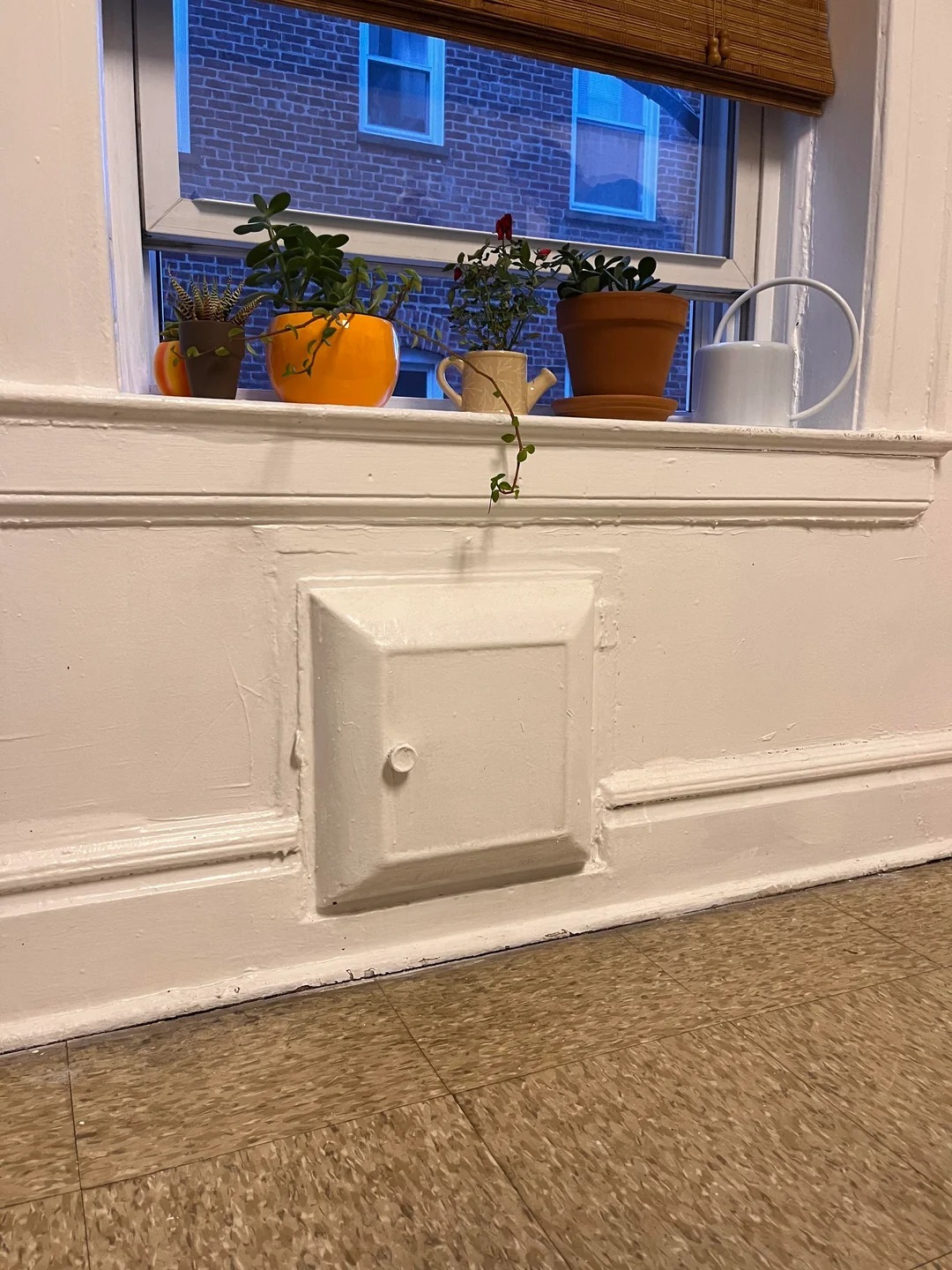
Painted-over, sealed door
-
Kitchen placement
👉 The most likely answer is an old chimney cleanout or utility access panel, sealed during later renovations.
It’s normal.
It’s harmless.
And it’s part of your building’s history.
SEO Keywords Included
-
little door in kitchen wall
-
1920s apartment mystery door
-
old apartment access panel
-
chimney cleanout door interior
-
vintage apartment wall door
-
old building utility access
If you’d like, I can also:
-
Help you confirm it visually
-
Write a short Reddit-style explanation
-
Create a home decor solution around it
-
Or compare it with similar cases from other buildings
Just tell me 👍