
Bake the round cakes for about 22–28 minutes (a 9×13‑inch pan may need closer to 25–30 minutes), or until:
-
The tops spring back when lightly pressed
-
A toothpick inserted in the center comes out clean or with a few moist crumbs
Cool the cakes in their pans on a rack for 10 minutes while you prepare the glaze.
4. Make the Sweet Lemon Glaze
In a medium bowl, whisk the powdered sugar with 3 tablespoons of lemon juice and the zest until smooth and pourable. If it seems too thick, add extra lemon juice a teaspoon at a time; if too thin, whisk in a bit more sugar.
This glaze is thinner than frosting so it can soak into the warm cake, but thick enough to cling in a shiny layer.
5. Glaze the Warm Cake Layers
Turn the slightly cooled cakes out onto wire racks set over parchment or trays. While the layers are still warm, poke them lightly with a skewer or fork, then spoon or pour the lemon glaze over the tops, letting it soak in and drip down the sides a bit.
Allow the glazed cakes to cool completely before frosting. The glaze locks in moisture and intensifies the lemon flavor without making the cake soggy.
6. Whip the Lemon Buttercream
-
Beat the softened butter on medium‑high speed until creamy and pale, about 2–3 minutes.
-
Gradually add the powdered sugar, beating on low at first, then increasing speed once incorporated.
-
Mix in 2 tablespoons lemon juice, lemon zest, a pinch of salt, and enough cream or milk to reach a smooth, spreadable texture. Taste and adjust with more juice for tang or sugar for sweetness.
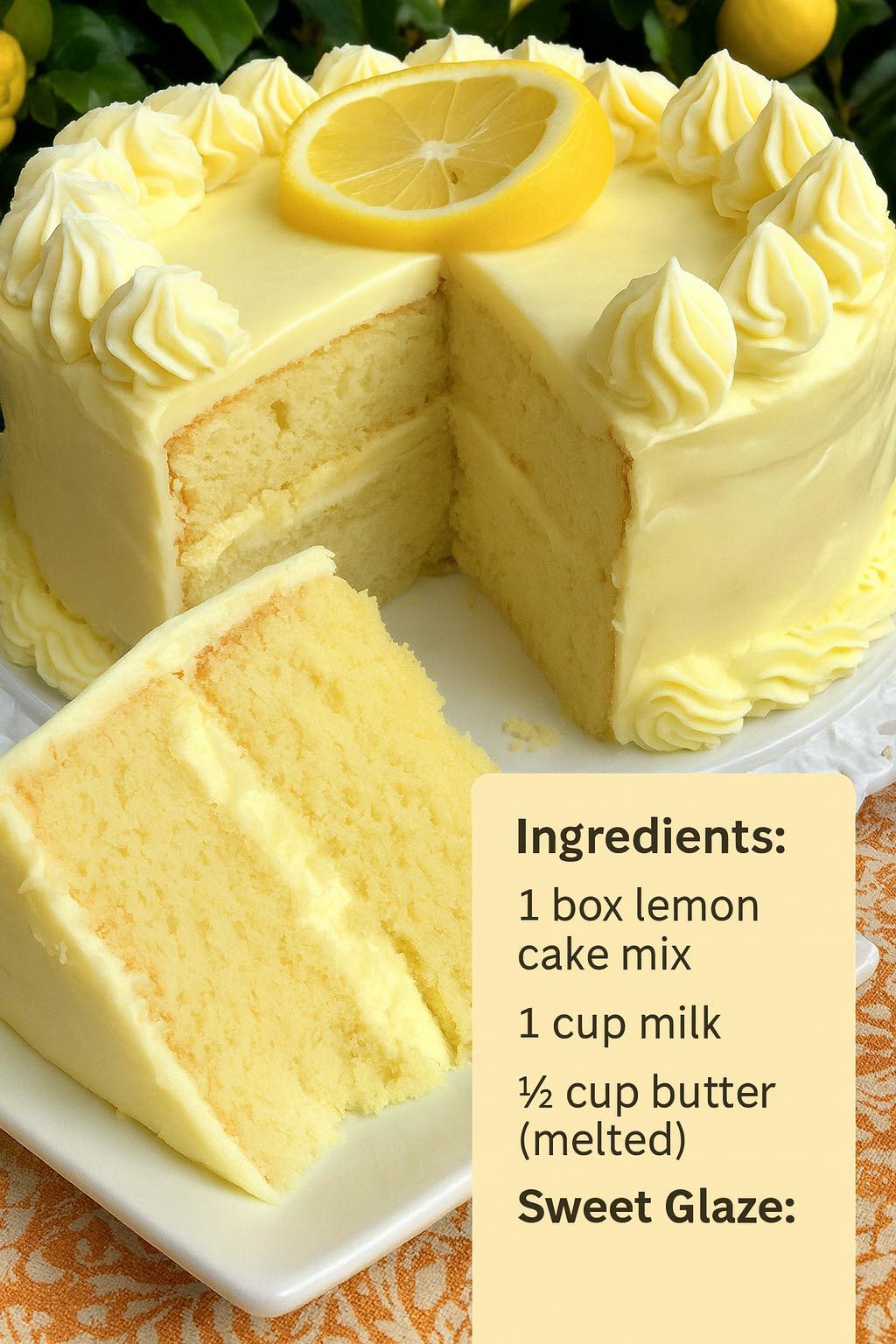
The buttercream should be thick enough to pipe decorative swirls on top like the border in your image.
7. Assemble the Lemon Layer Cake
-
Place one cooled, glazed cake layer on a serving plate. Spread a generous layer of lemon buttercream over the top.
-
Set the second layer on top, glazed side up. Apply a thin “crumb coat” of frosting over the whole cake and chill briefly to set.
-
Finish with a final, smooth coat of buttercream on the sides and top. Pipe rosettes or swirls around the top edge and place a thin lemon slice in the center for a fresh garnish.
For a faster sheet‑cake version, leave the cake in a 9×13‑inch pan, glaze it, and then frost only the top once cool.
Tips for the Best Lemon Butter Cake
-
Room‑temperature ingredients: Using room‑temperature milk, eggs, and butter helps the batter emulsify, giving a more even rise and tender crumb.
-
Do not over‑mix: Once the batter is smooth, stop mixing; over‑beating can make the cake tough.
-
Fresh lemons matter: Bottled lemon juice works in a pinch, but fresh juice and zest give a brighter, more natural lemon flavor people notice.
-
Chill before slicing: A short chill after frosting helps the layers firm up so slices are clean and look bakery‑perfect.
Flavor Variations
Offering variations helps capture more search queries and gives readers reasons to bookmark the recipe.
-
Lemon Poke Cake: Instead of layer cakes, bake in a 9×13‑inch pan, poke holes in the warm cake, and pour the glaze so it seeps deeply into the crumb, leaving a thinner icing on top.
-
Lemon Berry Cake: Spread a thin layer of lemon curd and fresh berries between the layers along with the frosting.
-
Lemon Coconut Cake: Fold shredded coconut into the frosting and press extra coconut onto the sides of the cake.
-
Lemon Loaf or Bundt: Bake the same batter in a loaf or bundt pan, adjusting the bake time and finishing with just the lemon glaze for a coffee‑house style treat.
What to Serve With Lemon Butter Cake
This bright, citrusy cake pairs well with:
-
Fresh berries or a simple berry sauce
-
Hot tea, iced tea, or coffee
-
Light mains like roast chicken, grilled fish, or salads for spring and summer menus
Because the flavors are refreshing rather than heavy, lemon cake makes an ideal finish to rich meals or holiday dinners.
Storage, Freezing, and Make‑Ahead
-
Room temperature: A frosted lemon butter cake keeps well at cool room temperature for 1–2 days if covered, thanks to the sugar in the buttercream and glaze.
-
Refrigerator: For warmer climates or longer storage, refrigerate the cake up to 4–5 days; bring slices to room temperature before serving for the best texture.
-
Freezer: Wrap unfrosted glazed layers tightly and freeze for up to 2 months. Thaw in the fridge, then bring to room temperature and frost. This is a great strategy for spreading prep over several days.
SEO‑Friendly FAQ
Can I use water instead of milk in this lemon cake?
Milk adds richness and improves the crumb; using water will still work but the cake will taste less buttery and feel slightly drier.
Can I bake this recipe as cupcakes?
Yes. Divide the batter among lined muffin tins, filling each about two‑thirds full, and bake 15–18 minutes. Brush the warm tops with glaze, cool, then pipe lemon buttercream.
Is this lemon cake very sweet?
The glaze and frosting are sweet, but the lemon juice and zest add enough tang to keep the flavor bright rather than heavy. You can cut back slightly on powdered sugar in the frosting for a less sweet version.
Can I skip the buttercream and just use the glaze?
Absolutely. For a simpler dessert, use only the sweet lemon glaze and serve slices with a dollop of whipped cream or a scoop of vanilla ice cream.
Final Thoughts
This lemon butter cake with sweet glaze transforms a humble box of lemon cake mix, a cup of milk, and melted butter into a tall, bakery‑style dessert packed with citrus flavor. Between the ultra‑moist crumb, tangy glaze, and silky lemon buttercream, every slice tastes like sunshine on a plate, making it a highly clickable, search‑friendly recipe for spring, Easter, Mother’s Day, and any time lemon lovers are craving something special.