
Start by patting the chicken breasts dry with paper towels. This step is crucial—it allows the surface to brown properly during cooking.
If the breasts are thick, place them between two sheets of parchment paper and gently pound them to an even thickness. This ensures uniform cooking and prevents dryness.
Step 2: Season for Maximum Flavor
In a small bowl, mix:
-
Olive oil
-
Garlic
-
Herbs
-
Paprika
-
Salt and pepper
Rub this mixture generously over both sides of the chicken breasts. Let them rest for 10–15 minutes at room temperature. This short marinating time allows flavors to penetrate the meat without overpowering it.
Step 3: Cook the Chicken Breasts
Heat a large non-stick or cast-iron skillet over medium heat. Add a drizzle of olive oil.
Place the chicken breasts in the pan and cook for 5–6 minutes per side, depending on thickness. Avoid moving them too much—this helps develop a golden crust.
During the final minute of cooking, drizzle the honey (or maple syrup) and lemon juice over the chicken. Let it bubble slightly to create a light glaze.
Internal temperature should reach 165°F (74°C).
Step 4: Rest Before Slicing
Remove the chicken from the pan and let it rest for 5 minutes. Resting allows juices to redistribute, ensuring moist chicken with every bite.
Slice against the grain for maximum tenderness.
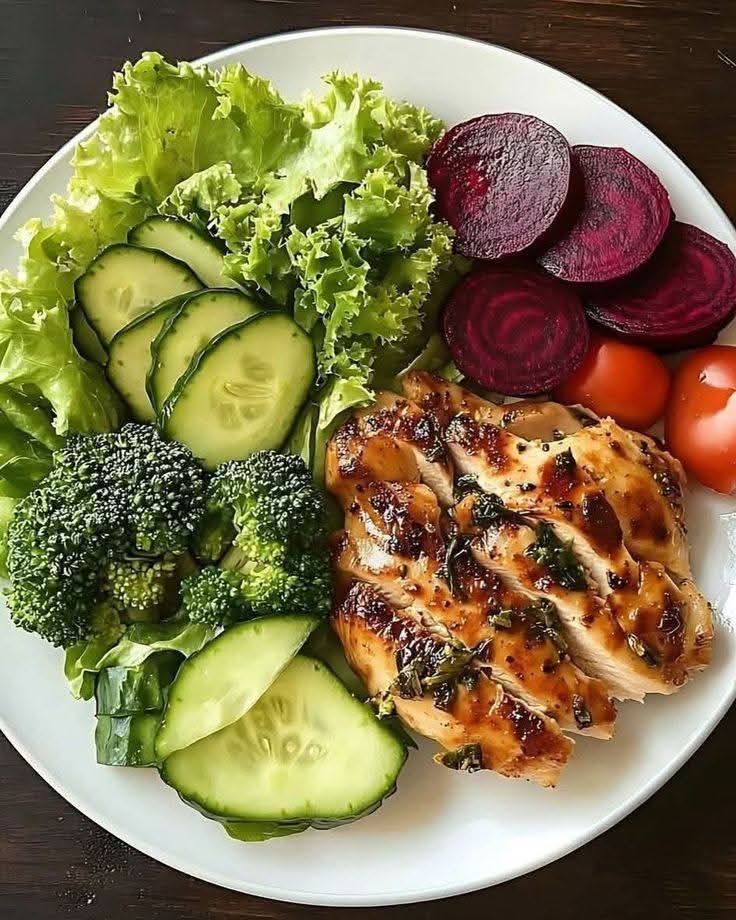
Preparing the Fresh Vegetables
While the chicken rests, prepare your vegetables:
-
Broccoli: Lightly steam or blanch for 2–3 minutes to keep it bright and crisp
-
Cucumber & lettuce: Wash thoroughly and slice fresh
-
Beets: Use pre-cooked beets for convenience or roast them for deeper flavor
-
Cherry tomatoes: Serve raw for freshness
Arrange everything on a plate for a colorful, nutrient-dense meal.
Nutrition Benefits of Chicken Breasts
Chicken breasts are a nutritional powerhouse:
-
High in protein – supports muscle growth and satiety
-
Low in fat – ideal for weight management
-
Rich in B vitamins – supports energy metabolism
-
Naturally gluten-free
Paired with vegetables, this meal delivers fiber, antioxidants, and essential micronutrients.
Common Mistakes to Avoid
-
Overcooking – the #1 reason chicken becomes dry
-
Skipping rest time – leads to lost juices
-
Under-seasoning – chicken breasts need bold flavors
-
Cooking straight from the fridge – causes uneven cooking
Flavor Variations You’ll Love
Mediterranean Style
Add olives, feta cheese, and oregano with a lemon-olive oil drizzle.
Spicy Garlic Chicken
Add chili flakes, cayenne pepper, and extra garlic.
Asian-Inspired
Swap herbs for soy sauce, ginger, and sesame oil.
Creamy Option
Serve with a light yogurt-garlic sauce or avocado dressing.
Storage and Meal Prep Tips
-
Refrigerator: Store cooked chicken for up to 4 days
-
Freezer: Freeze sliced chicken breasts for up to 2 months
-
Meal prep: Pair with quinoa, rice, or roasted vegetables
Reheat gently to avoid drying out.
Frequently Asked Questions
Can I bake chicken breasts instead?
Yes. Bake at 400°F (200°C) for 20–25 minutes, depending on thickness.
How do I know when chicken is done?
Use a meat thermometer—165°F is the safe internal temperature.
Can I use frozen chicken breasts?
Yes, but thaw completely before cooking for best texture.
Serving Suggestions
This chicken breast recipe pairs perfectly with:
-
Brown rice or couscous
-
Roasted sweet potatoes
-
Quinoa salad
-
Low-carb cauliflower rice
Final Thoughts: A Chicken Breast Recipe You’ll Make Again
This juicy herb-glazed chicken breast recipe proves that healthy food doesn’t have to be boring. With simple ingredients, smart cooking techniques, and fresh vegetables, you can transform everyday chicken breasts into a satisfying, flavorful meal that looks as good as it tastes.
Whether you’re cooking for yourself, your family, or meal-prepping for the week, this recipe delivers consistency, nutrition, and comfort—every single time.