
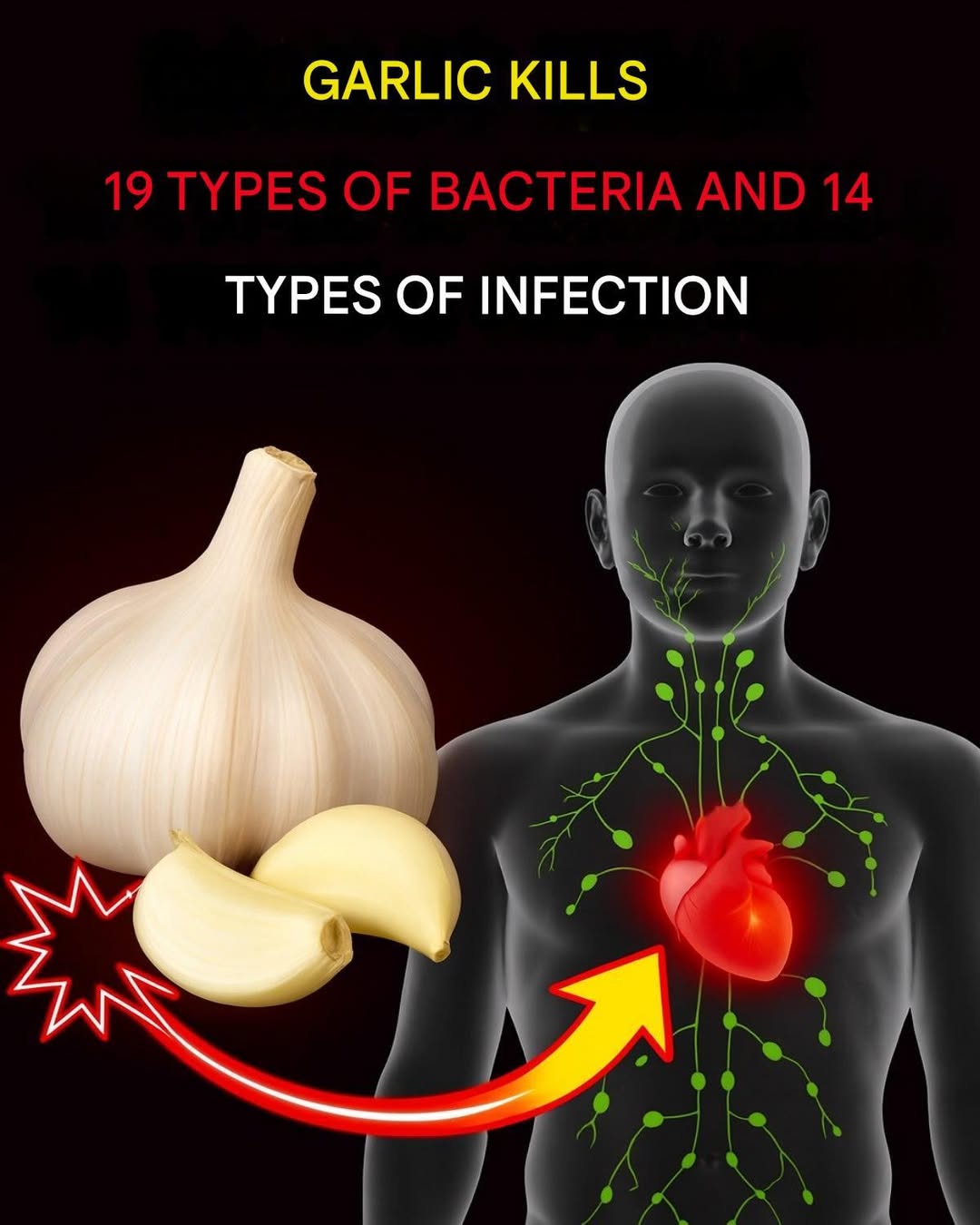
Garlic does have real, broad‑spectrum antimicrobial and heart‑friendly effects, but claims that it “kills 14 types of bacteria and 13 types of infections” are oversimplified marketing, not an exact medical fact. Laboratory studies show garlic compounds can inhibit many microbes in test tubes, yet this does not mean eating garlic can treat all those infections inside the human body or replace antibiotics.
What science actually says about garlic and germs
-
When garlic is crushed, it forms allicin, a sulfur compound with powerful antimicrobial activity in vitro.
-
Pure allicin can kill or inhibit a wide range of Gram‑positive and Gram‑negative bacteria, including some antibiotic‑resistant strains, as well as certain fungi, parasites, and viruses in lab tests.
-
Reviews confirm that garlic extracts and allicin damage microbial membranes, interfere with enzymes, and can reduce biofilm formation, which is important in chronic infections.
However:
-
These results mostly come from test tubes or petri dishes, often using concentrations higher than what food or simple home remedies can achieve in the bloodstream or lungs.
-
Few high‑quality human trials show garlic alone curing active infections; at best, it may be a supportive adjunct to standard treatment.
So the “19 bacteria / 14 infections” numbers in viral images should be read as a dramatic way of saying “very broad antimicrobial activity,” not a precise, clinically proven list.
Real, evidence‑based health benefits of garlic
Beyond the hype, garlic has several well‑documented benefits when used regularly as part of food or supplements.
1. Cardiovascular support
Meta‑analyses and clinical trials show that garlic preparations (especially standardized or aged extracts):
-
Modestly lower blood pressure in people with hypertension.
-
Improve cholesterol profiles and other cardiovascular risk markers.
-
May improve arterial stiffness and endothelial function in some high‑risk patients.
These effects are small but meaningful over time and work best combined with healthy diet, exercise, and prescribed medications when needed.
2. Possible immune and antimicrobial support
-
Garlic intake is associated with modest reductions in the frequency or duration of common colds in some small studies, although results are mixed and not definitive.
-
Because allicin can act directly on microbes and may modulate immune responses, many experts view garlic as a useful supportive food, not a stand‑alone treatment, during mild viral or bacterial infections.
Safe ways to use garlic for everyday wellness
In food (best‑supported and safest)
ADVERTISEMENT
