
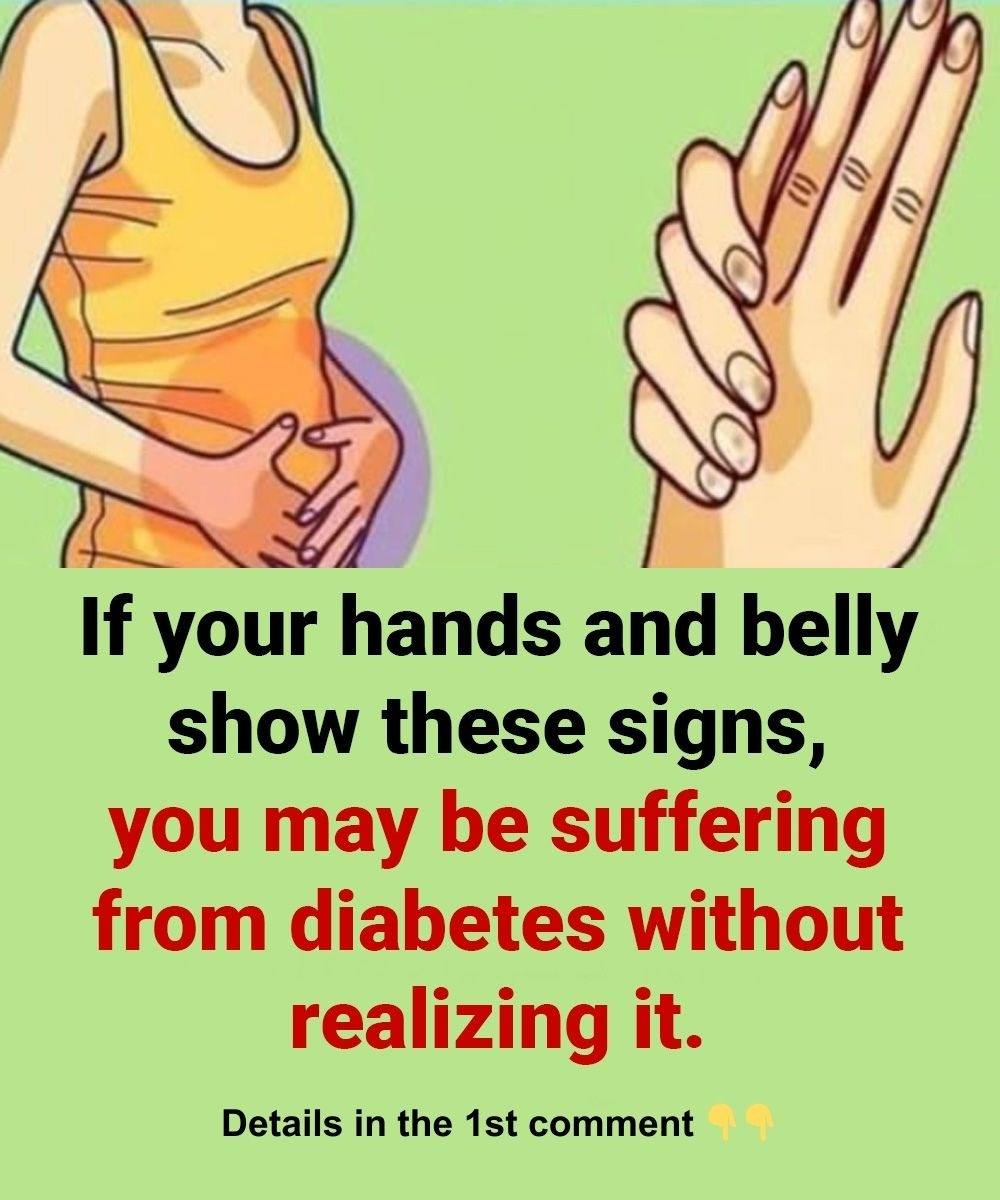
One of the clearest external signs of high insulin levels is darkened skin, especially in body folds.
These patches usually appear:
-
Around the belly folds
-
On the neck or armpits
-
Under the breasts
-
On the groin area
They may feel:
-
Velvety
-
Slightly thicker
-
Darker than surrounding skin
What this means
This symptom almost always indicates insulin resistance, even if blood sugar hasn’t reached diabetic levels yet.
4. Slow-Healing Belly or Hand Wounds
High blood sugar weakens circulation and the immune system.
If you notice:
-
Small cuts on your hands healing very slowly
-
Belly scratches or irritations lingering for days
-
Frequent infections or redness
…it may be an early sign of diabetes.
5. Unexplained Hand Weakness or Trembling
Low or fluctuating blood sugar levels can cause:
-
Shaking hands
-
Sudden weakness
-
Lightheadedness
-
Feeling jittery
While often confused with stress, these symptoms may indicate unstable glucose regulation.
When to See a Doctor
You should seek testing if you notice two or more of the following:
✔ Tingling or numbness in hands
✔ Swollen or expanding belly fat
✔ Dark patches of skin
✔ Persistent fatigue
✔ Constant thirst
✔ Frequent urination
A simple blood test can detect:
-
Fasting blood sugar
-
Hemoglobin A1C
-
Insulin resistance
Early detection prevents long-term complications like nerve damage, kidney issues, and heart disease.
How to Reduce Your Risk Starting Today
✔ Eat low-glycemic meals
Choose vegetables, whole grains, lean proteins, and avoid sugar-heavy foods.
✔ Increase daily movement
Even 20–30 minutes of walking lowers blood sugar levels.
✔ Maintain a healthy weight
Losing even 5–7% of body weight significantly reduces diabetes risk.
✔ Monitor symptoms closely
Look for changes in your hands, belly, energy levels, and appetite.
Final Thoughts
Your body often whispers before it screams.
Subtle changes in your hands and belly may be your body’s early warning system for diabetes. Paying attention to these signs — and taking action early — can prevent years of complications and help you regain control of your health.
If you notice these symptoms, don’t panic — just get tested. Early diagnosis is the key to living a long, healthy, and active life.