While the roast rests:
-
Pour off excess fat from the roasting pan, leaving 1–2 tablespoons plus all browned bits.
-
Set the pan over medium heat on the stovetop.
-
Add 1/2 cup dry red wine or beef broth to deglaze, scraping up the bits with a wooden spoon.
-
Add another 1–1 1/2 cups beef broth and simmer until slightly reduced.
-
Taste and adjust seasoning with salt and pepper. Strain if you want a smoother au jus.
Serve the au jus warm in a pitcher or small gravy boat alongside the carved beef.
Carving the Herb‑Crusted Prime Rib
-
If the bones are still attached, stand the roast up and slice along the bone line to remove the whole boneless roast in one piece. (You can serve the ribs separately as cook’s treats.)
-
Lay the boneless roast on its side.
-
Slice across the grain into 1/2‑ to 3/4‑inch thick slabs for generous dinner portions, or thinner slices for buffet‑style service.
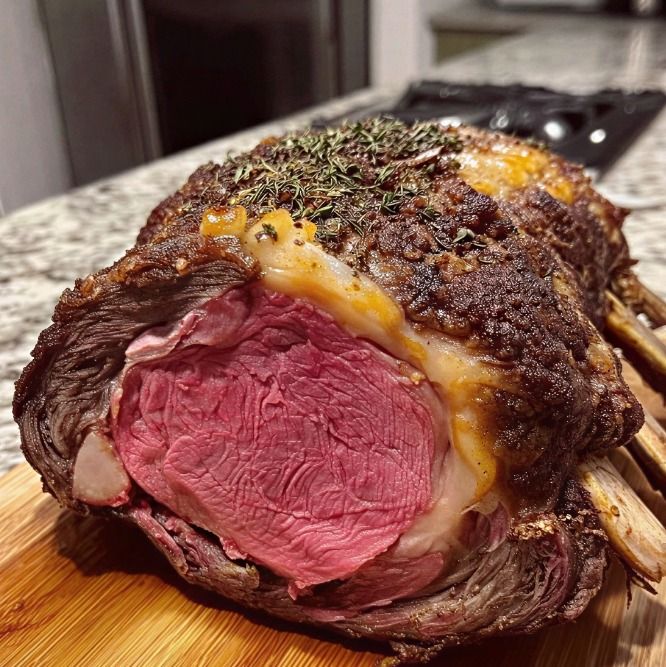
You’ll see the contrast of the dark herb crust, the rich creamy fat layer, and the tender pink interior similar to your photo.
Tips for Perfect Prime Rib
-
Use a thermometer, not time alone: Ovens vary and rib roasts come in different shapes; temperature is the only reliable guide.
-
Do not skip resting: Cutting too soon leads to dry slices.
-
Salt generously: Prime rib is a thick cut; the outer seasoning should be assertive to flavor each bite.
-
For a more pronounced crust: After the rest period, you can return slices briefly to a screaming hot skillet or under a broiler for 30–60 seconds to crisp the edges more without overcooking the center.
-
Save the bones: Reheat them later for a chef’s snack or use them to flavor soups and stocks.
Serving Suggestions
Prime rib is rich, so pair it with sides that complement its flavor and texture:
-
Creamy mashed potatoes or roasted baby potatoes
-
Yorkshire pudding or popovers for a traditional steakhouse feel
-
Roasted Brussels sprouts, green beans, or asparagus
-
Horseradish cream sauce (sour cream, prepared horseradish, lemon, salt)
-
Caesar salad or simple mixed greens with vinaigrette
For holidays, serve the roast on a large platter garnished with fresh rosemary sprigs and roasted garlic cloves.
Storage and Leftovers
-
Refrigerator: Store cooled roast tightly wrapped or in an airtight container for 3–4 days.
-
Freezer: Wrap sliced leftovers in foil and place in freezer bags for up to 2 months. Thaw overnight in the fridge before reheating.
-
Reheating: Warm slices gently in a 275°F (135°C) oven with a splash of broth, or reheat briefly in a covered skillet with a bit of au jus so they don’t overcook.
Leftover prime rib is excellent in steak sandwiches, hash, tacos, or stir‑fries.
FAQ
How much prime rib per person?
Plan on about 1 pound per adult when buying a bone‑in roast (which includes the bone weight) or 1/2–3/4 pound per person for a boneless roast. Large holiday meals often have many sides, so you can err on the lighter side if needed.
Can I cook prime rib to well‑done?
Technically yes, but this cut is prized for tenderness and juiciness at rare to medium‑rare. For guests who prefer well‑done meat, you can sear individual slices longer or place a few pieces back in the pan jus until they reach their desired doneness.
Should I season the roast overnight?
For even deeper flavor, you can salt the roast all over and refrigerate it uncovered or loosely covered overnight, then add the herb‑garlic paste just before roasting. This dry‑brining step helps the seasoning penetrate and improves browning.