
1) Cook the noodles
- Bring a large pot of salted water to a boil.
- Cook noodles according to package directions until just tender.
- Drain and rinse briefly with cool water (prevents sticking).
- Optional: Toss with 1 tsp sesame oil and set aside.
2) Mix the sauce
- In a bowl, whisk soy sauce, oyster sauce (optional), hoisin (optional), brown sugar, water/broth, rice vinegar, sesame oil,
minced garlic, optional ginger, and optional chili sauce. - Set aside so it’s ready to pour in quickly.
3) Velvet and cook the chicken
- Toss sliced chicken with cornstarch, salt, and pepper.
- Heat 1 tbsp oil in a large skillet or wok over medium-high heat.
- Cook chicken 3–5 minutes, stirring until browned and cooked through. Remove to a plate.
4) Stir-fry the veggies
- In the same pan, add a tiny splash of oil if needed.
- Add carrots and bell pepper; stir-fry 2 minutes.
- Add cabbage (and broccoli/mushrooms if using); stir-fry 2–3 minutes until crisp-tender.
- Add half the green onions and stir 15 seconds.
5) Toss everything together
- Return chicken to the pan.
- Add cooked noodles.
- Pour sauce over everything and toss 1–2 minutes until glossy and evenly coated.
- If it looks dry, add 1–2 tbsp water/broth and toss again.
6) Serve
- Taste and adjust: more soy for salt, more vinegar for brightness, more sugar for sweetness, more chili for heat.
- Top with remaining green onions and sesame seeds. Serve hot.
Serving and Storage:
Serving: Serve as-is for a full meal, or pair with egg rolls, dumplings, cucumber salad, or steamed edamame.
Storage: Refrigerate leftovers in an airtight container for up to 4 days.
Reheat: Reheat in a skillet with a splash of water/broth to loosen the sauce, or microwave in short bursts, stirring between.
Freezing: Not ideal (noodles can soften), but you can freeze up to 1 month. Thaw overnight and reheat with a splash of broth.
Tips:
- Slice chicken thin: Thin strips cook fast and stay juicy.
- Cornstarch “velveting”: Keeps chicken tender and helps sauce cling.
- Have everything ready: Stir-fry goes fast—prep first, then cook.
- Don’t overcook veggies: Crisp-tender gives the best texture.
- Control sauce: Add gradually if you like lighter coating; double for extra saucy lo mein.
Variations:
- Shrimp lo mein: Swap chicken for shrimp; cook shrimp 2–3 minutes.
- Beef lo mein: Use thin-sliced steak and cook quickly over high heat.
- Vegetarian: Use tofu and add extra mushrooms; swap oyster sauce for vegetarian “oyster” sauce.
- Spicy garlic: Add chili garlic sauce and extra garlic, finish with red pepper flakes.
- Peanut twist: Stir 1 tbsp peanut butter into the sauce for a creamy, nutty flavor.
Tips:
- Use spaghetti if needed: Not traditional, but works surprisingly well for lo mein at home.
- Make it glossy: Add a tiny splash of sesame oil at the end for restaurant-style shine.
- Boost umami: Oyster sauce makes a big difference—use it if you can.
- Meal prep: Keep sauce separate until reheating for best texture.
Conclusion:
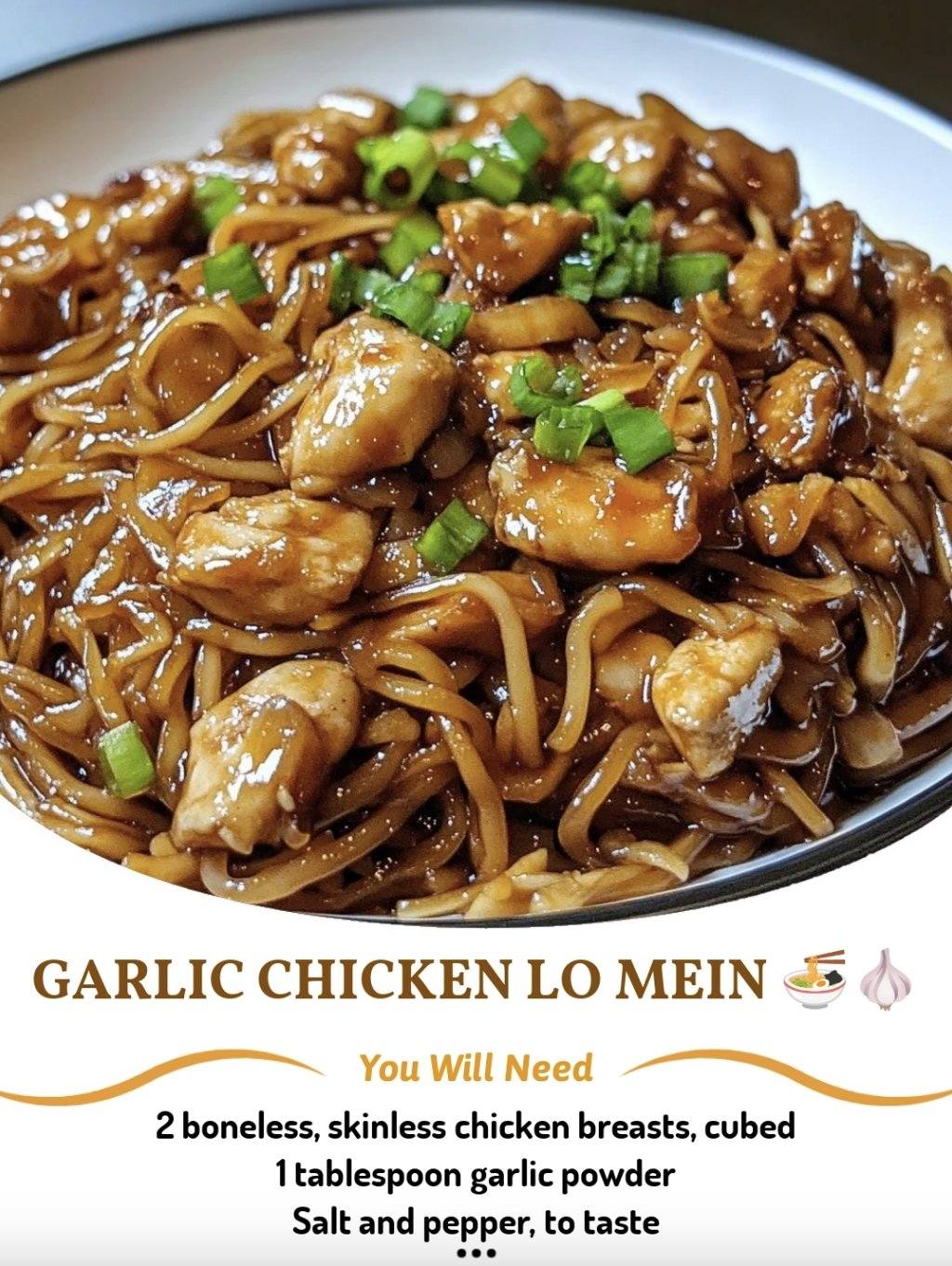
Garlic Chicken Lo Mein is a fast, flavorful, better-than-takeout dinner you can make anytime. With tender chicken, crisp veggies, and a
savory garlic sauce coating every noodle, it’s comforting, customizable, and perfect for busy nights. Once you try it, it’ll become a
regular in your weeknight rotation.
FAQ:
Can I make lo mein without oyster sauce?
Yes. Oyster sauce adds classic depth, but you can skip it and add a little extra soy sauce plus a touch more brown sugar or hoisin.
What noodles should I use?
Lo mein noodles are best, but spaghetti, linguine, yakisoba, or ramen noodles can work in a pinch.
Why did my noodles clump together?
Noodles clump if they sit too long. Rinse briefly after draining and toss with a little sesame oil to prevent sticking.
How do I keep chicken tender?
Slice thinly and toss with cornstarch before cooking. Cook quickly over medium-high heat and avoid overcooking.
Can I add more veggies?
Absolutely—this recipe is flexible. Just keep cooking times short so veggies stay crisp-tender.
Is lo mein the same as chow mein?
Not exactly. Lo mein uses softer boiled noodles tossed in sauce, while chow mein often features crispier noodles and a different texture.