In a mixing bowl, beat eggs, granulated sugar, brown sugar, and
vanilla for 2–3 minutes until thicker, lighter in color, and glossy.
This step helps create the iconic crackly brownie top and gives the cookies structure without making them cakey.
Step 3: Combine the Chocolate and Egg Mixture
Pour the slightly cooled melted chocolate into the egg-sugar mixture. Mix until smooth and uniform.
You’ll notice the batter becomes shiny and luxurious—this is exactly what you want.
Step 4: Add the Dry Ingredients
In a separate bowl, whisk together flour, cocoa powder, baking powder,
salt, and espresso powder (if using). Fold the dry mixture into the wet batter gently until
just combined. Avoid overmixing; once you no longer see streaks of flour, stop.
Step 5: Chill the Batter
Cover and chill the batter in the fridge for 20–30 minutes. The batter should thicken so it’s scoopable, like a
very soft cookie dough. Chilling helps the cookies bake up thicker and fudgier instead of spreading too far.
Step 6: Scoop and Shape
Preheat oven to 175°C / 350°F. Line two baking sheets with parchment paper.
Scoop portions (about 1.5 tablespoons each) and place them 5–7 cm apart (2–3 inches).
Crinkle option: If you want a snowy crinkle finish, roll each scoop quickly in powdered sugar before placing it on
the tray. Work fast so the sugar stays visible on the surface.
Step 7: Bake
Bake for 9–11 minutes, depending on your oven and cookie size. The edges should look set and slightly firm,
but the centers should still look soft. Overbaking is the fastest way to lose the fudgy middle.
Step 8: Cool Properly
Let the cookies cool on the baking sheet for 5 minutes (they’re delicate at first), then transfer to a wire rack.
They will continue setting as they cool, creating that chewy brownie-cookie texture.
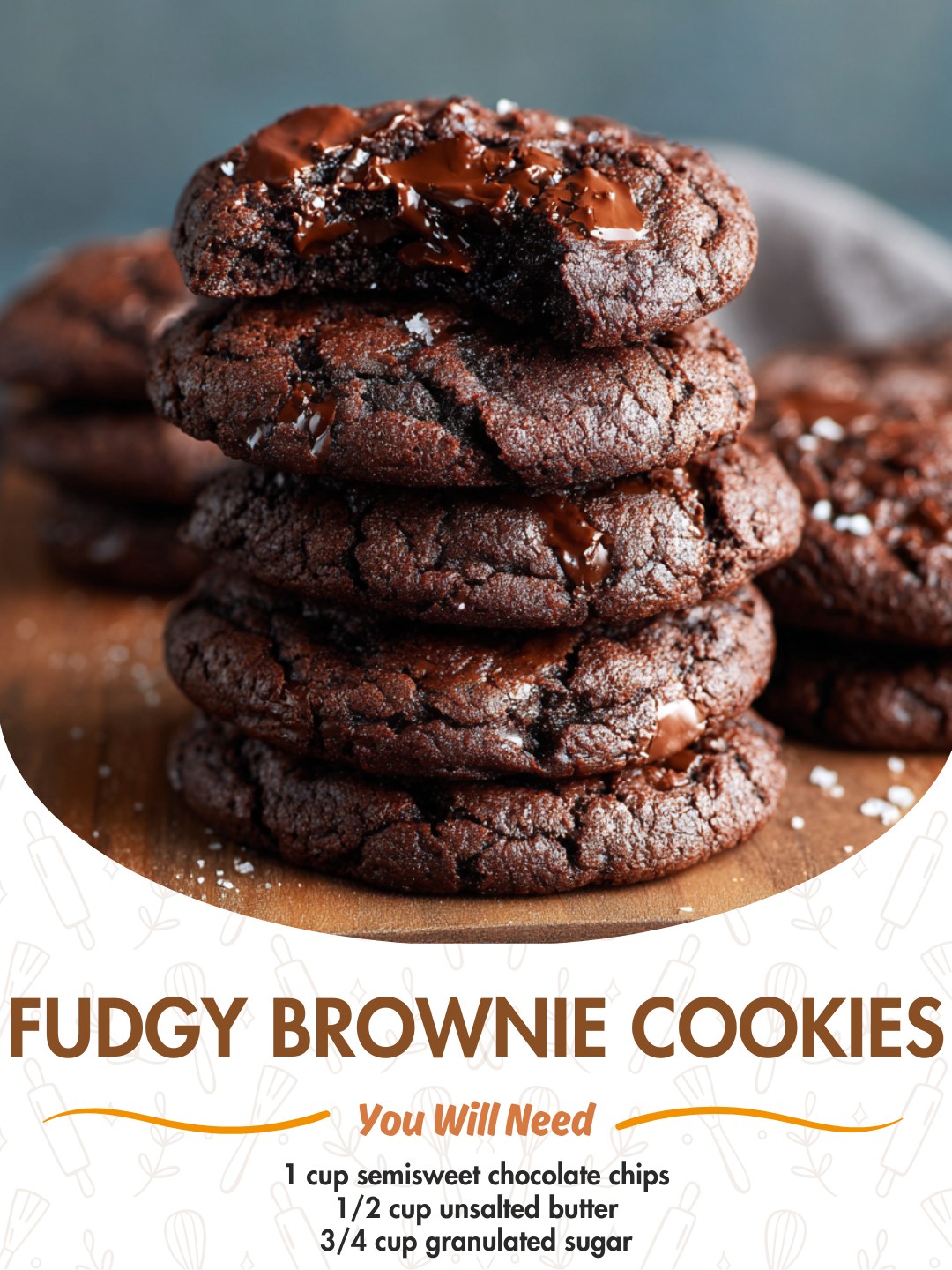
Quick success check: When done, the tops look shiny and crackly, the cookies feel slightly underbaked in the center,
and they firm up into a fudgy chew as they cool.
Serving and Storage:
Serving
Serve these cookies slightly warm for the most brownie-like experience: rich aroma, soft center, and maximum chocolate intensity.
They’re also excellent at room temperature, where the edges become chewier and the crackly tops feel extra crisp.
- Classic: with a glass of milk or hot coffee
- Dessert upgrade: sandwich vanilla ice cream between two cookies
- Party platter: pair with lighter cookies (shortbread or sugar cookies) for contrast
Storage
Store cooled cookies in an airtight container at room temperature for 3–4 days.
For the softest centers, place a small slice of bread in the container (it helps maintain moisture).
If you prefer chewier edges, skip the bread and keep the lid tightly sealed.
Freezing
These cookies freeze beautifully. Freeze fully cooled cookies in a freezer-safe bag or container for up to
2 months. Thaw at room temperature or warm briefly in the microwave (5–10 seconds) for a fresh-baked feel.
Make-Ahead Tip
You can refrigerate the batter for up to 24 hours. If it becomes very firm, let it sit at room temperature
for 10–15 minutes before scooping.
Tips:
These are the “rules” that consistently produce thick, fudgy brownie cookies with shiny tops.
Tip 1: Don’t skip whipping the eggs and sugar
The glossy top and crinkly surface come from properly dissolved sugar and aeration. A short whip builds the right structure
without turning the cookies cakey.
Tip 2: Cool the chocolate slightly before mixing
Warm is fine; hot is not. If the melted chocolate is too hot, it can cook the eggs and ruin the smooth batter texture.
Tip 3: Chill the batter for thickness
Brownie cookie batter starts loose. Chilling thickens it so the cookies bake taller and fudgier.
If your kitchen is warm or your chocolate is very fluid, chilling matters even more.
Tip 4: Pull them out when the center looks soft
If you wait until the center looks fully set, you’ve gone too far. Bake until the edges are set and the middle is still soft;
carryover heat finishes the job.
Tip 5: Use parchment paper
Parchment prevents sticking and helps cookies bake evenly. It also makes cleanup effortless, which is always a win.
Variations:
Once you master the base recipe, these variations let you tailor flavor and texture without losing the brownie-cookie identity.
1) Double Chocolate Chip
Fold in 120 g (3/4 cup) chocolate chips at the end. This adds pockets of melty chocolate and makes the cookies
feel extra decadent.
2) Walnut or Pecan Brownie Cookies
Add 80–100 g (about 3/4 cup) toasted chopped walnuts or pecans for classic brownie crunch.
Toasting the nuts first makes them taste richer and prevents them from seeming “raw.”
3) Peppermint Brownie Cookies
Replace vanilla with 1/2 tsp peppermint extract and optionally add crushed candy canes on top right after baking.
(Use peppermint carefully—too much can overpower the chocolate.)
4) Mocha Brownie Cookies
Keep the espresso powder and add 1 tbsp strong cooled coffee to the batter.
The result tastes deeper and more “grown-up,” perfect with a cappuccino.
5) Spicy Mexican Hot Chocolate Twist
Add 1/2 tsp cinnamon and a tiny pinch of cayenne. It should be a warm background note, not a burn.
This version is amazing around the holidays.
Tips:
This second tips section is for troubleshooting—what to do if your cookies spread too much, turn cakey, or don’t crinkle.
If your cookies spread too thin
- Chill the batter longer (40–60 minutes).
- Make sure your baking sheet is cool before adding new scoops.
- Check butter and chocolate ratio—accurate measuring matters.
If your cookies are cakey instead of fudgy
- Don’t add extra flour “to thicken it.” Fudgy batter is softer.
- Mix only until combined once dry ingredients are added.
- Don’t overbake—cakey texture often comes from too much bake time.
If you don’t get shiny, crackly tops
- Whip eggs and sugar long enough to look glossy and slightly thicker.
- Use granulated sugar (it helps with that classic brownie sheen).
- Make sure cocoa and flour are not overmixed into a dense batter.
If powdered sugar “melts away”
- Roll dough while it’s chilled and not too wet.
- Use a generous coating and handle quickly.
- For extra bold crinkles, roll twice: once lightly, then again heavily.
Conclusion:
Fudgy Brownie Cookies are the best of two worlds: the rich chocolate depth of brownies and the convenience of cookies.
The keys are simple—melt good chocolate with butter, whip eggs and sugars for shine, fold the batter gently, chill just enough,
and bake until the centers still look a little soft. Do that, and you’ll get cookies with glossy crackles, chewy edges,
and centers that feel like brownie batter’s best moment—set, but still tender.
Once you’ve baked your first perfect batch, you can personalize endlessly: nuts for crunch, peppermint for the holidays,
espresso for a mocha vibe, or extra chocolate chips for maximum indulgence. However you serve them, expect the same result:
people reaching for “just one more.”
FAQ:
Can I use cocoa powder only (no melted chocolate)?
You can, but the texture will be less fudgy and the flavor slightly less complex. Melted chocolate contributes cocoa solids plus cocoa butter,
which creates that brownie-like richness. If you want the true fudgy effect, keep the melted chocolate.
Do I have to chill the batter?
For best results, yes. Chilling thickens the batter so the cookies bake up thicker and more brownie-like.
If you skip chilling, they can spread more and bake flatter.
How do I know when they’re done?
The edges should look set and slightly firm, while the centers still look soft.
They will continue to set as they cool on the baking sheet.
Why did my cookies turn out dry?
The most common reason is overbaking. Pull them earlier—bake times are short, and ovens vary.
Also ensure you measured flour correctly (spoon and level, or use a scale).
Can I make them gluten-free?
Yes—swap the all-purpose flour for a 1:1 gluten-free baking blend. The texture may be slightly different, but still delicious.
Keep the chill step to help structure.
Can I freeze the dough instead of baked cookies?
Absolutely. Scoop the dough into balls, freeze on a tray, then store in a freezer bag.
Bake from frozen, adding 1–2 minutes to the bake time.
What’s the best chocolate to use?
A good-quality semi-sweet chocolate bar or chips (around 50–60% cacao) is ideal.
If you go very dark (70%+), the cookies can taste less sweet—still great, but more intense.