
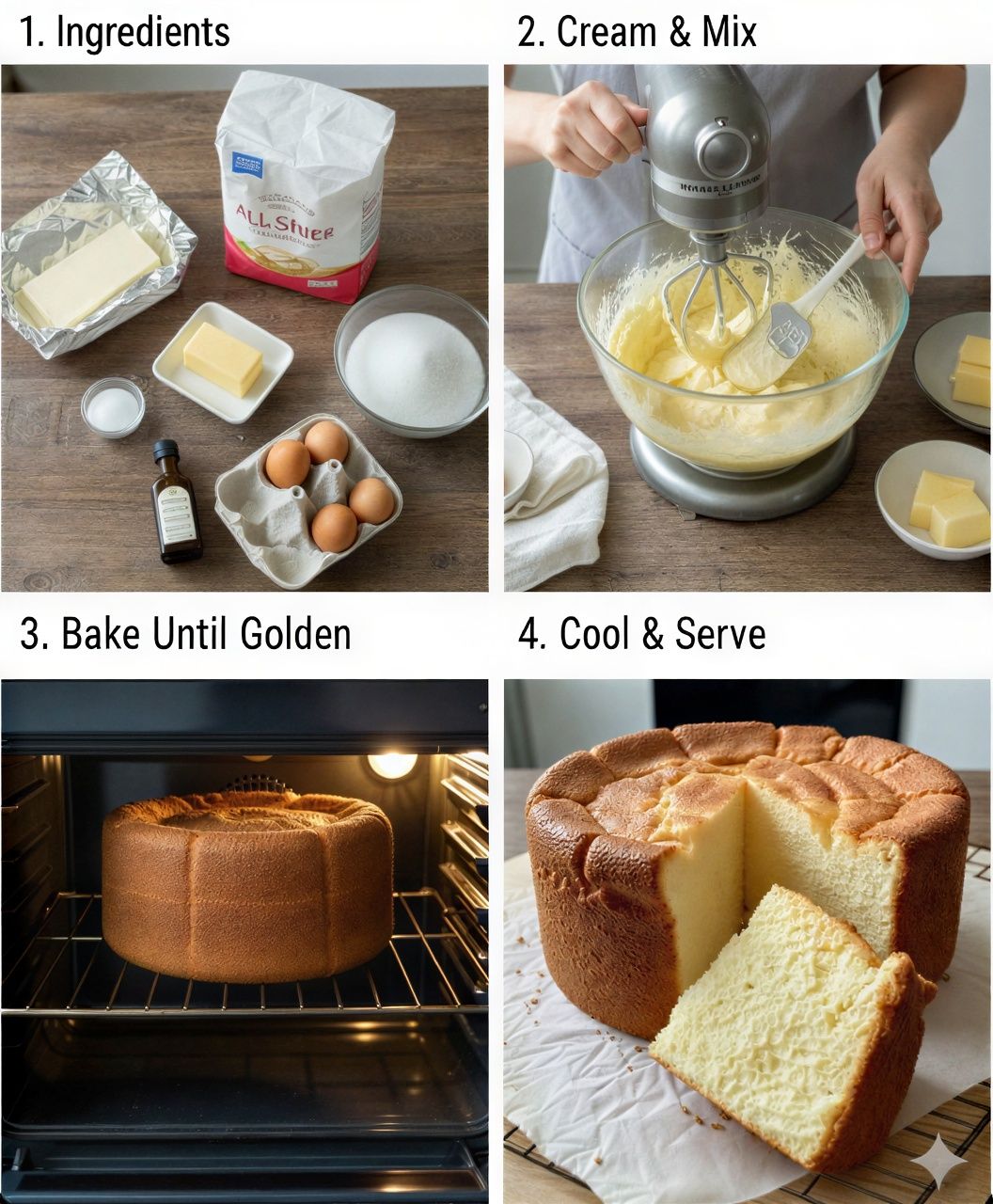
In a large bowl, beat butter and cream cheese until smooth and fluffy (about 2 minutes). Add sugar gradually and cream for
4–6 minutes until pale and airy. This step builds the cake’s structure and that velvety crumb.
3) Add Eggs Slowly
Add eggs one at a time, mixing well after each. Scrape down the bowl often. Stir in vanilla (and almond extract if using).
Adding eggs slowly helps keep the batter stable and prevents curdling.
4) Add Dry Ingredients Gently
Whisk flour, salt, and baking powder (if using) in a separate bowl. Add to the batter in 2–3 additions, mixing on low speed
just until combined. Do not overmix—overmixing can make pound cake tough.
5) Fill the Pan
Spoon batter into the prepared bundt pan and smooth the top. Tap the pan gently on the counter to release large air pockets.
6) Bake Low and Slow
Bake for 75–90 minutes (bundt), or until a toothpick inserted comes out clean or with a few dry crumbs.
If the top browns too fast, tent loosely with foil during the last 20–30 minutes.
7) Cool Properly
Cool in the pan for 15–20 minutes, then invert onto a rack to cool completely. Slicing too early can make the crumb
seem gummy, so let it fully cool.
8) Optional Glaze
Whisk powdered sugar with milk (or lemon juice) and vanilla until smooth. Drizzle over cooled cake.
Serving and Storage:
Serving
Serve slices plain (it’s already rich and flavorful) or dress them up with fresh berries, whipped cream, or a spoonful of fruit compote.
For a cozy twist, toast a slice lightly and serve with coffee or tea.
Storage
- Room temperature: Wrap tightly and store up to 4 days.
- Refrigerator: Store up to 7 days (bring to room temp for best texture).
- Freezer: Wrap slices individually and freeze up to 2 months. Thaw at room temperature.
Make-Ahead Note
Pound cake often tastes even better the next day. If baking for an event, making it 1 day ahead is a smart move.
Tips:
Keys to a Velvety Texture
- Room-temperature ingredients: butter, cream cheese, and eggs blend smoothly for a fine crumb.
- Cream long enough: 4–6 minutes with sugar creates the right structure.
- Mix flour gently: low speed, stop as soon as it’s combined.
- Bake at 325°F: prevents dry edges while the center bakes through.
Pan Prep Matters
- Grease every detail: bundt pans have curves that love to hold onto cake.
- Flour the pan: or use baking spray with flour for easier release.
- Cool before unmolding: 15–20 minutes is the sweet spot.
Variations:
1) Lemon Cream Cheese Pound Cake
Add 1 tablespoon lemon zest and replace 1 teaspoon vanilla with lemon extract. Finish with a lemon juice glaze.
2) Sour Cream “Extra Moist” Version
Add 1/2 cup sour cream to the batter after eggs. Reduce butter slightly if desired. The crumb becomes ultra-tender.
3) Marble Pound Cake
Remove 1 1/2 cups batter, mix with 2 tablespoons cocoa powder and 1 tablespoon milk, then swirl into the pan for a marbled look.
4) Pecan Praline Crunch
Sprinkle chopped pecans and a little brown sugar in the bottom of the bundt pan before adding batter for a caramelized nut layer.
5) Holiday Spice Version
Add 1 teaspoon cinnamon and a pinch of nutmeg. Serve with spiced whipped cream or caramel drizzle.
Tips:
Troubleshooting
- Dry cake: likely overbaked. Check earlier and tent with foil if browning fast.
- Gummy streaks: batter may have been overmixed or cake sliced while warm.
- Cracked top: common in pound cake; it’s usually a sign of a well-risen cake.
- Stuck in the pan: grease/flour more thoroughly next time; let it cool 15–20 minutes before inverting.
How to Get Bakery-Pretty Slices
Use a serrated knife and slice with gentle sawing motions. Wipe the blade between cuts for clean, neat pieces.
Flavor Enhancers
A small amount of almond extract adds a “grandma bakery” aroma. If you love a deeper vanilla note, use vanilla bean paste.
Conclusion:
Cozy Grandma’s Velvety Cream Cheese Pound Cake is the kind of timeless recipe that earns its place on every dessert table.
It’s rich without being heavy, sweet without being overwhelming, and tender with that unmistakable buttery pound cake bite.
With cream cheese in the batter, the texture turns extra smooth and luxurious—exactly the kind of cake people remember.
Bake it for holidays, birthdays, Sunday suppers, or quiet mornings with coffee. Dress it up with glaze and berries, or serve it plain
and let the flavor speak for itself. Either way, this is the cake that feels like a warm kitchen and a familiar smile.
FAQ:
Why did my pound cake crack on top?
A crack is normal in pound cake. The batter is dense, and as it rises, the top sets and splits. It’s usually a sign of a well-baked cake.
Can I use salted butter?
Yes. Reduce added salt to 1/4 teaspoon to keep the flavor balanced.
Do I have to use a bundt pan?
No. You can use two loaf pans. Start checking around 55–70 minutes depending on your oven and pan size.
Why is my cake dense and tough?
Overmixing after adding flour can develop gluten and make the cake tough. Mix on low speed and stop as soon as the flour disappears.
How do I keep it moist?
Don’t overbake, wrap tightly once cooled, and store at room temperature for the best texture. Cream cheese also helps keep it tender for days.
Can I freeze this pound cake?
Yes. Wrap tightly in plastic wrap and foil, or freeze slices individually. Thaw at room temperature for best texture.