- In a large mixing bowl (or the bowl of a stand mixer), sift or whisk together the flour, sugar, cocoa powder, baking powder, baking soda, and salt. Sifting helps remove lumps, especially from cocoa and powdered sugar, and ensures the leavening is evenly distributed.
- Take a moment to inspect the mixture—uniform color indicates that the cocoa and flour are thoroughly combined, which means fewer streaks and better structure in the finished cake.
3. Add Eggs, Buttermilk, and Oil
- Add the eggs, buttermilk, and oil to the dry ingredients. Using a low mixer speed or a whisk, blend just until the mixture turns smooth and no large pockets of dry flour remain. Scrape down the sides and bottom of the bowl to catch any unmixed cocoa.
- Stir in the vanilla extract. The batter will be thick at this point, almost like a brownie batter, which is expected before adding the hot liquid.
4. Incorporate the Hot Coffee or Water
- Carefully pour the hot coffee or water into the batter in a slow, steady stream while mixing on low or whisking. The hot liquid “blooms” the cocoa, intensifying the chocolate flavor and helping to create a moist crumb.
- Mix until the batter is smooth and well combined. It will be quite thin—do not be tempted to add more flour. Thin batter is a hallmark of many well‑known classic chocolate cakes and leads to a tender texture.
5. Bake the Cakes
- Divide the batter evenly between the prepared round pans, or pour it all into the 9×13‑inch pan. Tap the pans gently on the counter to dislodge air bubbles.
- Bake in the preheated oven for about 28–32 minutes for 8‑inch layers, or 32–36 minutes for a 9×13‑inch pan. The exact time depends on your oven and pan material. The cake is done when the top springs back lightly to the touch and a toothpick inserted in the center comes out with just a few moist crumbs.
- Avoid opening the oven too early; wait until the cake appears mostly set. Sudden temperature drops during the first 20 minutes can cause the center to sink.
6. Cool Completely
- Place the pans on a cooling rack and let the cakes cool in their pans for 10–15 minutes. Running a knife around the edges helps loosen any stuck spots.
- Invert each cake onto a rack, peel off the parchment, and cool completely before frosting. If the cakes are even slightly warm, the frosting can melt or slide.
7. Make the Classic Chocolate Frosting
- Beat the softened butter on medium speed until creamy and light, about 2–3 minutes. This introduces air and creates a smooth base for the frosting.
- Sift together the powdered sugar and cocoa powder to remove any lumps. Gradually add the mixture to the butter, mixing on low to avoid clouds of sugar.
- Add vanilla, a pinch of salt, and 1/4 cup of milk or cream. Beat on medium speed until smooth and fluffy. If the frosting is too thick, add more milk a tablespoon at a time; if it is too thin, add a little more powdered sugar.
- Taste and adjust. You can increase cocoa for a deeper chocolate flavor or add a bit more salt if the sweetness feels too intense.
8. Assemble the Cake
- If the cake layers are domed, level them with a long serrated knife so the tops are flat. Save the crumbs as a snack or to use as decoration.
- Place one layer on a serving plate or cake board. Spread a generous layer of frosting over it, pushing the frosting to the edges.
- Set the second layer on top. Apply a thin “crumb coat” layer of frosting over the entire cake, trapping stray crumbs. Chill the cake for 15–20 minutes to firm up the crumb coat.
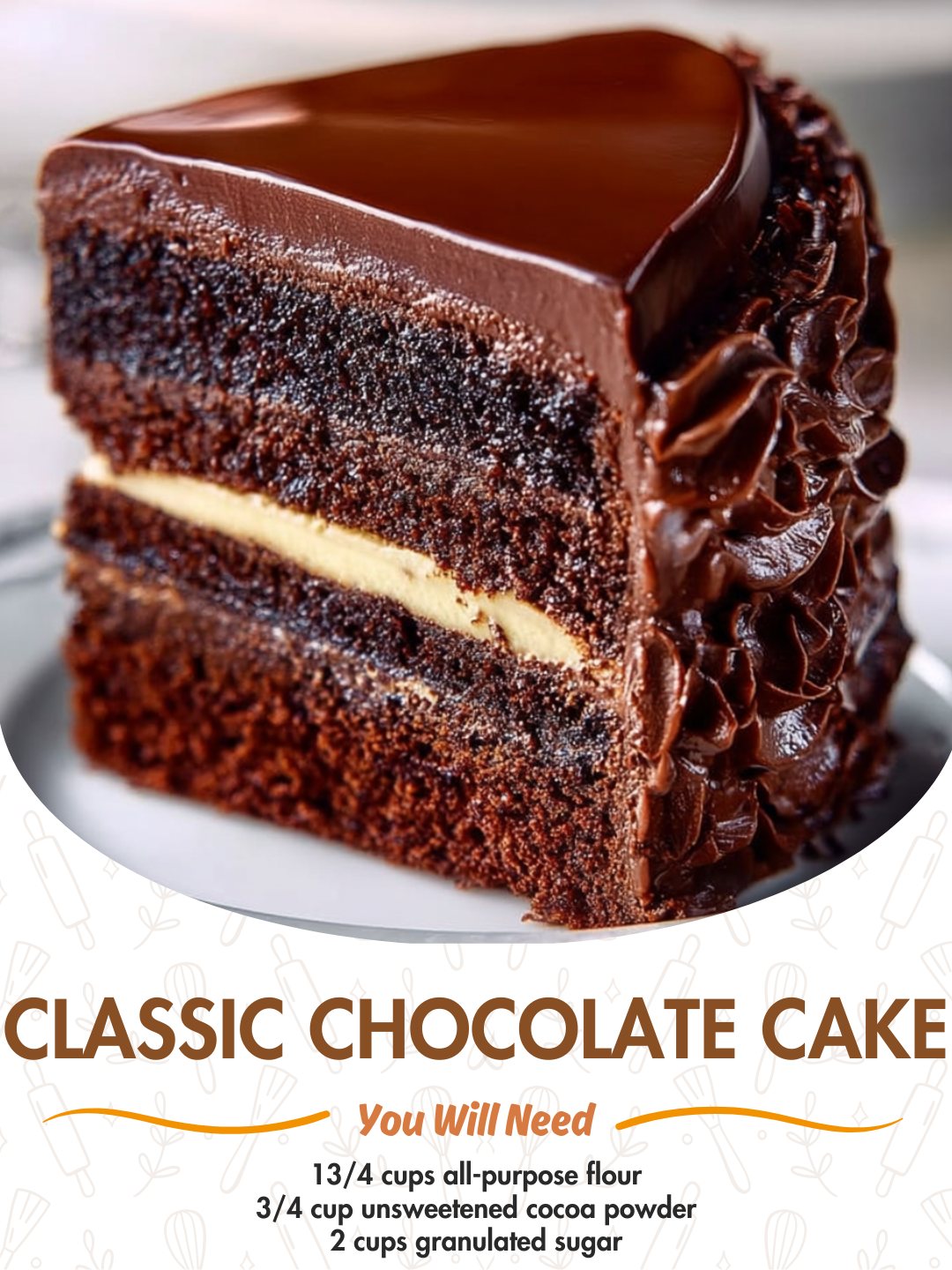
- Finish with a thicker, even coat of frosting. Use a spatula or knife to create swirls or smooth sides, depending on your preferred look. Add sprinkles, chocolate shavings, or a drizzle of ganache if you like.
Serving and Storage
Classic chocolate cake tastes best at cool room temperature, when the crumb is soft and the frosting is creamy. If the cake has been refrigerated, let it sit out for 20–30 minutes before serving. A clean, sharp knife wiped between cuts will give neater slices, especially if your frosting is thick.
To store, cover the cake with a dome or wrap it loosely in plastic to prevent drying. At room temperature, a frosted cake keeps well for about two days, assuming the environment is not too warm. For longer storage, refrigerate for up to five days. The refrigerator can slightly firm the crumb and frosting, but the flavor remains excellent. For extended storage, tightly wrap individual slices in plastic and freeze them for up to two months. Thaw in the refrigerator or at room temperature before serving.
Variations on Classic Chocolate Cake
Once you have a reliable base recipe, it is easy to adapt it for different occasions or flavor preferences. Here are several ideas that maintain the classic character while adding a personal twist.
- Chocolate Ganache Finish: Replace the buttercream frosting with a simple ganache made from equal parts warm cream and chopped chocolate. Pour over the cooled cake and let it drip naturally for a glossy, bakery‑style finish.
- Chocolate Raspberry Cake: Spread a thin layer of raspberry jam between the cake layers before frosting, and decorate the top with fresh raspberries. The tart fruit cuts through the richness.
- Chocolate Orange Cake: Add the zest of one or two oranges to the batter and a spoonful of orange zest to the frosting. You can also substitute part of the hot water with orange juice for extra citrus notes.
- Mocha Layer Cake: Use strong coffee instead of water in the batter and add espresso powder to the frosting. This intensifies the chocolate flavor and creates a sophisticated mocha cake.
- Filled Celebration Cake: For birthdays, add a surprise filling—such as chocolate mousse, whipped cream, or cookies‑and‑cream frosting—between the layers, then frost the exterior as usual.
- Sheet Cake Version: Bake the batter in a 9×13‑inch pan and top with a thick layer of frosting, then serve directly from the pan. This version is great for school events, potlucks, or casual gatherings.
Tips for Consistent Results
- Use room‑temperature ingredients. Eggs and buttermilk blend more easily when not ice‑cold, leading to smoother batter and better rise. If they are cold from the fridge, set them out 30 minutes before baking.
- Measure flour correctly. Too much flour can make the cake dry. If you do not use a scale, spoon the flour into the measuring cup and level it off instead of scooping directly from the bag, which compacts it.
- Do not overmix. After adding the flour, mix only until the batter is smooth. Overmixing can develop gluten and result in a tougher texture, especially with all‑purpose flour.
- Check your leavening. Fresh baking powder and baking soda are essential. If they are old, the cake may not rise properly. Replacing them regularly improves consistency.
- Rotate pans if needed. If your oven has hot spots, rotate the pans once during baking (around the two‑thirds mark) to promote even browning and rise.
- Let the cake cool before frosting. Patience pays off; frosting warm cake often leads to melted, sliding frosting and a messy appearance.
Conclusion
Classic chocolate cake earns its place at the center of so many celebrations because it is simultaneously familiar, comforting, and endlessly customizable. With a straightforward ingredient list, simple mixing method, and forgiving texture, this recipe is accessible even to beginner bakers, yet the result tastes and looks worthy of a special occasion. Whether you finish it with a cloud of chocolate buttercream, a sleek ganache, or a simple dusting of powdered sugar, a well‑made chocolate cake rarely lasts long on the table.
By paying attention to basics such as properly prepared pans, accurate measuring, and avoiding overbaking, you can rely on this classic chocolate cake to turn out moist and flavorful every time. From weeknight desserts to milestone birthdays, it is a versatile, crowd‑pleasing recipe you can return to again and again, adapting with different fillings and decorations as your creativity grows.
FAQ
1. Can I make this cake without coffee?
Yes. Hot water can be used instead of coffee with excellent results. Coffee intensifies the chocolate flavor but does not make the cake taste like coffee; if you prefer to avoid it entirely, simply use boiling water.
2. What type of cocoa powder works best?
Both natural and Dutch‑processed cocoa powder work in this recipe. Dutch‑processed cocoa yields a darker color and smoother flavor, while natural cocoa lends a lighter color and slightly sharper chocolate taste. Use what you have, but choose an unsweetened variety.
3. How can I make the cake even more moist?
Ensuring you do not overbake is the most important factor. You can also substitute part of the buttermilk with sour cream or add a tablespoon or two of neutral oil if you want an extra plush crumb. Brushing the cooled layers with a simple syrup before frosting is another way to boost moisture.
4. Can I bake this as cupcakes?
Yes. Fill lined cupcake tins about two‑thirds full with batter and bake at 350 °F (180 °C) for around 18–22 minutes, or until a toothpick comes out mostly clean. This recipe should make roughly 24 standard cupcakes.
5. How far in advance can I prepare the cake?
You can bake the layers one or two days ahead and keep them tightly wrapped at room temperature, then frost them closer to serving time. Unfrosted layers also freeze well for up to two months; thaw them in their wrapping before assembling the cake.
6. Can I make this cake gluten‑free?
You can substitute a cup‑for‑cup gluten‑free baking flour blend for the all‑purpose flour. Choose a blend that includes xanthan gum or a similar binder for structure. The texture may be slightly different, but many bakers report good results with modern blends.
7. Why did my cake sink in the middle?
Cakes often sink because they were underbaked, the oven door was opened too early, the leavening was inaccurate or expired, or too much batter was placed in a pan that was too small. Ensuring correct oven temperature, using the proper pan size, and baking until the center is fully set minimizes sinking.
8. Can I halve or double this recipe?
You can halve the ingredients to bake a single 8‑inch layer or an 8‑inch square cake. To double, use two 9×13‑inch pans or bake additional layers for a taller stacked cake. When scaling up, monitor baking time closely and use a large enough bowl to mix the batter without overworking it.