Stir in Italian seasoning, oregano, red pepper flakes (optional), and tomato paste.
Cook 1–2 minutes to deepen flavor. Add crushed tomatoes, tomato sauce, broth, and sugar (optional).
Simmer uncovered for 15–25 minutes, stirring occasionally, until slightly thickened.
In a bowl, combine ricotta, egg, половина (half) of the Parmesan, parsley, salt, and pepper.
Mix until creamy.
Preheat to 375°F (190°C). Lightly grease a 9×13-inch baking dish.
Spread a thin layer of meat sauce in the bottom of the dish.
Add a layer of noodles, then spread 1/3 of the ricotta mixture, then 1/3 of the meat sauce,
then a sprinkle of mozzarella. Repeat layers two more times.
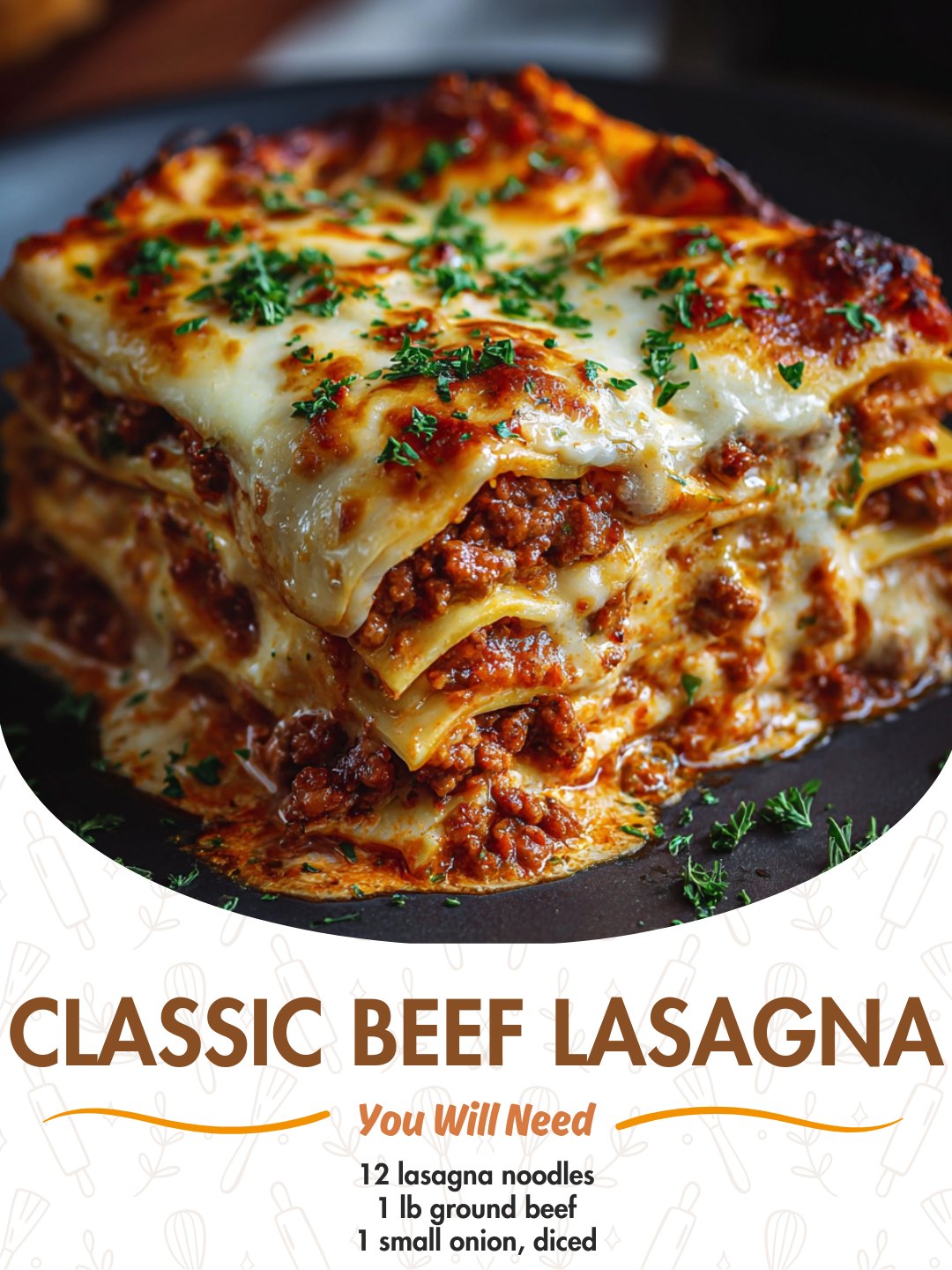
Finish with a generous layer of mozzarella and the remaining Parmesan.
Cover tightly with foil (tent slightly so it doesn’t stick to cheese).
Bake for 25 minutes. Uncover and bake another 15–20 minutes until bubbly and golden.
Let lasagna rest 15–20 minutes before cutting. This helps it set and slice cleanly.
Serving and Storage:
Serve classic beef lasagna with garlic bread, a crisp Caesar salad, or roasted vegetables. For a bright contrast,
add a simple side salad with lemon vinaigrette.
Storage: Refrigerate leftovers in an airtight container for up to 4 days.
Reheating: Reheat slices in the oven at 350°F (175°C) until hot, or microwave gently with a splash of water
and a loose cover to prevent drying.
Freezing: Lasagna freezes beautifully. Freeze baked and cooled lasagna (whole or sliced) for up to
2 months. Thaw overnight in the fridge and reheat covered in the oven.
Tips:
- Thicken the sauce: A thicker sauce prevents watery lasagna. Simmer until it coats a spoon.
- Don’t overcook noodles: Slightly undercooked noodles finish perfectly in the oven.
- Rest time is essential: Cutting too early makes lasagna slide apart.
- Use whole-milk ricotta: It’s creamier and richer than part-skim.
- Foil tent: Prevents cheese from sticking to the foil while baking.
Variations:
- Beef & Sausage: Use 1 lb beef + 1/2 lb Italian sausage for extra flavor.
- Veggie boost: Add chopped mushrooms, spinach, or zucchini to the sauce (cook off moisture first).
- Extra cheesy: Add provolone or fontina between layers.
- Spicy: Use spicy Italian sausage and extra red pepper flakes.
- White lasagna style: Swap red sauce for a béchamel/Alfredo-style sauce (different but delicious).
Tips:
- Make-ahead: Assemble up to 24 hours ahead, cover, refrigerate, then bake.
- Freeze unbaked: Assemble, wrap tightly, freeze up to 2 months. Bake from thawed (recommended) or add time.
- Clean slices: Use a sharp knife and wipe between cuts.
- Flavor upgrade: Add a splash of red wine to the sauce while simmering (optional).
Conclusion:
Classic Beef Lasagna is comfort food at its best—rich, layered, cheesy, and perfect for sharing. With a flavorful meat sauce,
creamy ricotta, and plenty of mozzarella, this recipe delivers that traditional homemade taste you want every time.
Make it for a family dinner, a special gathering, or a freezer meal you’ll thank yourself for later.
FAQ:
Can I use oven-ready lasagna noodles?
Yes. Make sure your sauce is slightly looser (not watery, just not too thick) so the noodles can absorb liquid as they bake.
Why is my lasagna watery?
Common causes include sauce that wasn’t simmered long enough, watery ricotta, or cutting too soon.
Simmer sauce to thicken and always rest before slicing.
Can I make lasagna the day before?
Yes. Assemble, cover, and refrigerate. Bake when ready (add 5–10 minutes if baking straight from the fridge).
What’s the best cheese combination?
Ricotta for creaminess, mozzarella for melt, and Parmesan for salty depth is classic. Provolone is a great extra layer.
How do I know when lasagna is done?
The edges should be bubbling and the top should be golden. If you have a thermometer, the center should reach about 165°F (74°C).