In a large mixing bowl, whisk together flour, granulated sugar, cocoa powder, baking powder, baking soda, and salt until there are no visible lumps of cocoa or flour. Starting with a well‑mixed dry base helps the cake rise evenly.
Crack in the eggs, then pour in the buttermilk, oil, and vanilla. Whisk until the batter looks mostly smooth; at this point it will be thick but spreadable.
Slowly add the hot water or coffee while whisking. The heat helps dissolve any remaining sugar and blooms the cocoa for deeper chocolate flavor. The batter will become thin—this is normal and leads to a moist, tender crumb.
Pour the batter into the prepared pan and smooth the top. Bake for about 22–28 minutes, or until the center springs back lightly when touched and a toothpick inserted in the middle comes out with a few moist crumbs but no wet batter.
Place the pan on a cooling rack and let the cake cool to room temperature. For a more stable base, you can chill it in the refrigerator for 30–60 minutes before adding the next layer.
Step 2: Prepare the Peanut Butter Layer
- Beat peanut butter and butter.
In a medium bowl, beat the softened butter and peanut butter together until smooth, creamy, and slightly lightened in color. This step ensures a fluffy, spreadable texture rather than a heavy, dense layer. - Add powdered sugar.
Gradually add the powdered sugar, mixing on low at first to avoid clouds of sugar, then increasing the speed as it incorporates. The mixture will become quite thick. - Adjust consistency.
Add vanilla, a pinch of salt, and 1 tablespoon of milk or cream. Beat again, adding more milk a teaspoon at a time if needed, until the mixture is creamy and spreadable but still thick enough to hold its shape. You want a frosting‑like consistency that will firm in the fridge. - Spread over the cooled cake.
Scrape the peanut butter mixture onto the cooled chocolate base. Using an offset spatula, spread it evenly to the edges, taking your time to keep the layer level and smooth. If the cake has pulled away from the parchment slightly, gently push frosting into the gaps so the chocolate topping will later flow over a flat surface. - Chill to set.
Refrigerate the pan for at least 30–45 minutes. This step helps the peanut butter layer firm up, so it does not ripple when you pour on the warm chocolate topping.
Step 3: Make and Add the Chocolate Topping
- Warm the cream.
In a small saucepan or microwave‑safe bowl, heat the heavy cream just until it begins to steam and small bubbles form around the edges—do not let it boil vigorously. - Combine with chocolate.
Place the chocolate chips or chopped chocolate in a heatproof bowl and pour the hot cream over them. Let the mixture stand for 1–2 minutes to soften the chocolate, then gently whisk from the center outward until smooth and glossy. Stir in the butter if using; it adds extra shine and a slightly softer set. - Let the ganache cool slightly.
Allow the ganache to cool for 5–10 minutes; it should thicken a little but still be easily pourable. If it is too hot, it can melt the top of the peanut butter layer; if too cool, it will be hard to spread. - Pour over the chilled peanut butter layer.
Remove the pan from the refrigerator. Pour the ganache over the peanut butter layer, starting in the center and nudging it gently toward the edges with a spatula so it forms a smooth, even coating. - Add garnishes.
While the ganache is still soft, sprinkle on chopped peanuts, mini peanut butter cups, chocolate shavings, or flaky sea salt if you like. Garnishes stick best when added at this stage. - Chill until firm.
Return the pan to the refrigerator and chill for at least 1–2 hours, or until the chocolate topping is fully set and the layers feel firm when lightly pressed.
Serving and Storage
When you are ready to serve, lift the bar cake out of the pan using the parchment overhang and place it on a cutting board. Run a large, sharp knife under hot water, wipe it dry, and slice the cake into bars of your preferred size. A heated knife glides more easily through the firm ganache and peanut butter layers, helping you achieve clean, sharp edges.
Because of the butter and cream in the upper layers, the bars are best stored in the refrigerator. Arrange slices in an airtight container with parchment between layers to prevent sticking. They typically keep their texture and flavor for 4–5 days. For longer storage, freeze individual bars on a tray until solid, then wrap and store in freezer bags. Thaw in the refrigerator or at room temperature until just soft enough to bite; eaten slightly chilled, they resemble a sophisticated candy bar.
Variations
Once you master the basic structure of chocolate base, peanut butter middle, and chocolate topping, you can customize the bar cake to suit different tastes and occasions. Here are several ideas:
- Crunchy Peanut Butter Bar Cake: Use crunchy peanut butter instead of creamy in the middle layer, or fold crushed pretzels or chopped peanuts into the peanut butter mixture for extra texture.
- Oreo or Cookie Crust Base: Replace the baked chocolate cake with a no‑bake crust made from crushed chocolate sandwich cookies mixed with melted butter. Press firmly into the pan, chill to set, and then proceed with the peanut butter and chocolate layers.
- Salted Caramel Swirl: Before pouring the chocolate ganache on top, drizzle spoonfuls of salted caramel over the chilled peanut butter layer and swirl gently with a knife. The caramel ribbons add a sweet‑salty note that complements both chocolate and peanut butter.
- Dark Chocolate Lover’s Version: Use dark chocolate (60–70% cocoa) in both the base and the topping, and reduce sugar slightly in the cake layer if you prefer a less sweet dessert. You can also add a teaspoon of instant espresso powder to the dry ingredients in the cake for deeper chocolate flavor.
- No‑Bake Peanut Butter Bar Cake: Skip baking entirely by using a thick cookie crust on the bottom, a no‑bake peanut butter mixture made with powdered sugar and crushed graham crackers, and a ganache topping. Chill until set and slice as usual.
- Gluten‑Free Option: Substitute a gluten‑free all‑purpose flour blend in the cake layer or use a gluten‑free cookie crust. Ensure your chocolate and peanut butter are also gluten‑free according to their labels.
Tips for Success
- Let layers cool completely. Patience is crucial: adding the peanut butter layer to a warm cake risks melting the butter in the filling, and pouring hot ganache over soft peanut butter can cause mixing of layers. Cooling and chilling between steps keeps each layer distinct.
- Use smooth, shelf‑stable peanut butter for clean slices. Natural peanut butter (the kind that separates) can be used, but it may create an oilier, softer middle layer. If you choose it, stir very thoroughly and consider adding more powdered sugar to help it set.
- Adjust sweetness to taste. The middle layer is intentionally rich and sweet, but you can reduce powdered sugar by 1/4–1/2 cup if you prefer a slightly less sweet dessert, especially if you use milk chocolate for the topping.
- Cut while chilled, serve closer to room temperature. Slicing is easiest when the bar cake is cold, but the flavors and textures are most pleasant once the bars warm slightly. Let them sit for 10–15 minutes at room temperature before serving if you can.
- Don’t overbake the base. A few moist crumbs on the toothpick are ideal. Overbaking can produce a dry or crumbly base that separates from the peanut butter layer when sliced.
- Use parchment for easy removal. Skipping parchment often means you must cut bars directly in the pan, which can be awkward and scratch the surface. Parchment handles make a big difference in presentation.
Conclusion
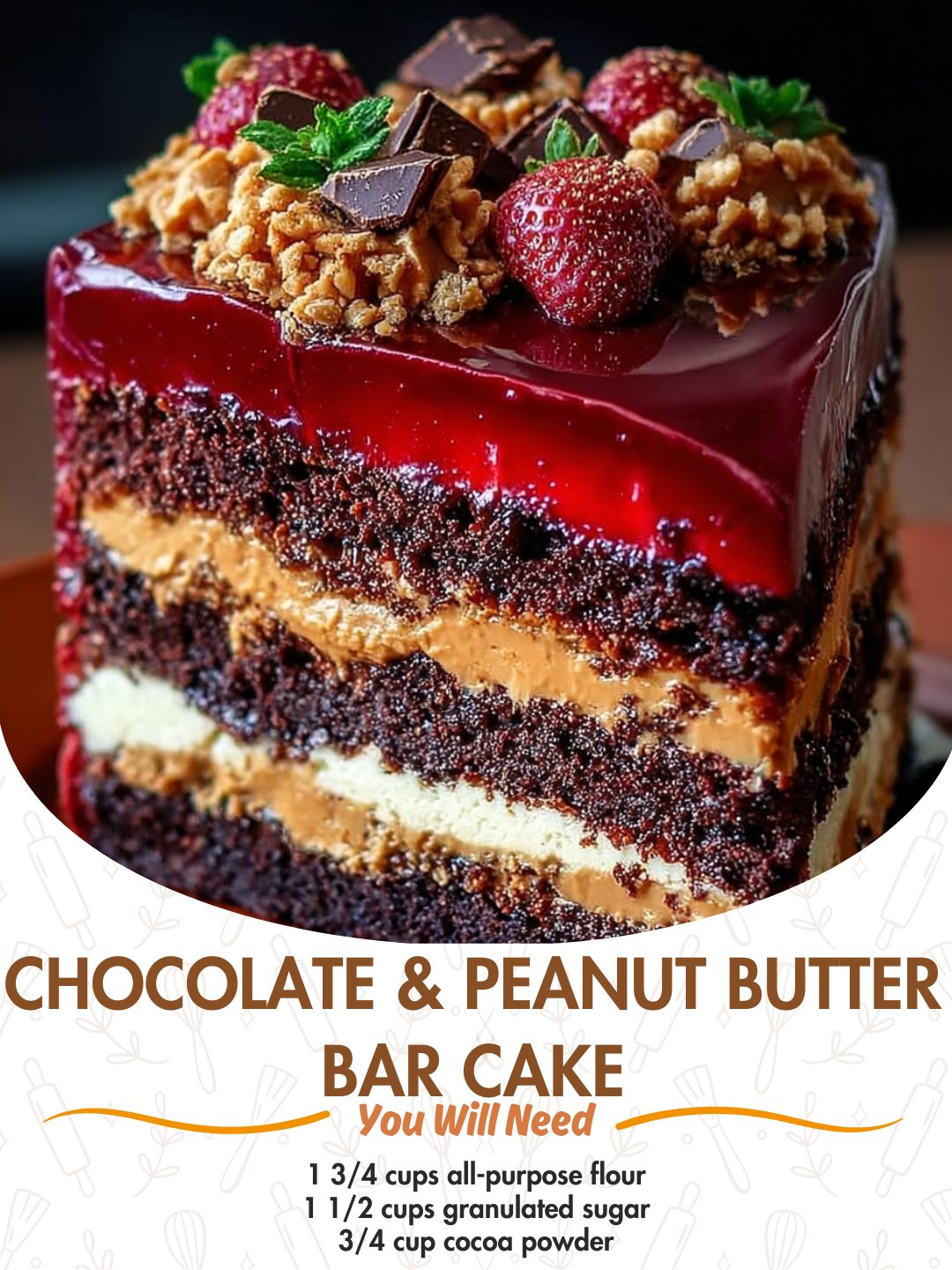
A Chocolate & Peanut Butter Bar Cake proves that you do not need intricate decorations or advanced techniques to create a dessert that feels special. By layering a moist chocolate base, a silky peanut butter filling, and a glossy chocolate cap, you build a bar that looks like a bakery indulgence but is straightforward enough for any confident home baker. The rectangular format makes it easy to slice and share, whether you are feeding a crowd at a potluck or stocking your freezer with grab‑and‑go treats.
With a few simple tweaks—different crusts, darker chocolate, crunchy add‑ins—you can customize this bar cake to suit almost any palate, all while staying anchored to the beloved combination of chocolate and peanut butter. Once you have made it once or twice, the process becomes almost automatic, and it is likely to join your regular rotation of reliable, crowd‑pleasing desserts.
FAQ
1. Can I use a boxed brownie mix for the base?
Yes. If you want to save time, you can bake a boxed brownie mix in a 9×13‑inch pan according to package directions, let it cool completely, and then add the peanut butter and chocolate layers on top. Choose a fudgy style rather than a cakey one for the best texture.
2. Does this recipe work with crunchy peanut butter?
It does. Crunchy peanut butter will create a middle layer with small peanut pieces throughout, adding texture to each bite. If you like clear visual contrast, reserve some chopped peanuts to sprinkle on top of the ganache as well.
3. How long can the bars stay at room temperature?
Because of the butter and cream in the upper layers, it is best to keep the bars refrigerated and only leave them at room temperature for about 2 hours when serving. In warm environments, the chocolate topping may soften more quickly, so returning leftovers promptly to the fridge preserves their structure.
4. Can I freeze the entire pan instead of individual bars?
Yes. Once the ganache is fully set, wrap the entire pan tightly in plastic wrap and then foil before freezing. When you are ready to serve, thaw in the refrigerator overnight, then lift out and slice. Individual bars are more convenient for single servings, but freezing the whole pan is ideal when you plan to serve a large group later.
5. What if my ganache looks dull or grainy?
If the ganache appears dull or slightly broken, gently warm it over a double boiler or in short microwave bursts and whisk in a teaspoon or two of extra cream. Small adjustments usually bring it back together. Avoid adding cold cream to very hot chocolate, which can sometimes cause separation.
6. Can I make the bars nut‑free?
To make a nut‑free version, replace peanut butter with a seed butter like sunflower seed butter and skip nut toppings. Be sure your chocolate and other ingredients are processed in nut‑free facilities if you are baking for someone with a serious allergy.
7. How thick should each layer be?
In a 9×13‑inch pan, the chocolate base will be the thinnest layer (about 1–1.5 cm), the peanut butter layer will be slightly thicker, and the ganache will be a relatively thin cap. This ratio keeps each bite balanced: enough chocolate to frame the peanut butter without overwhelming it.