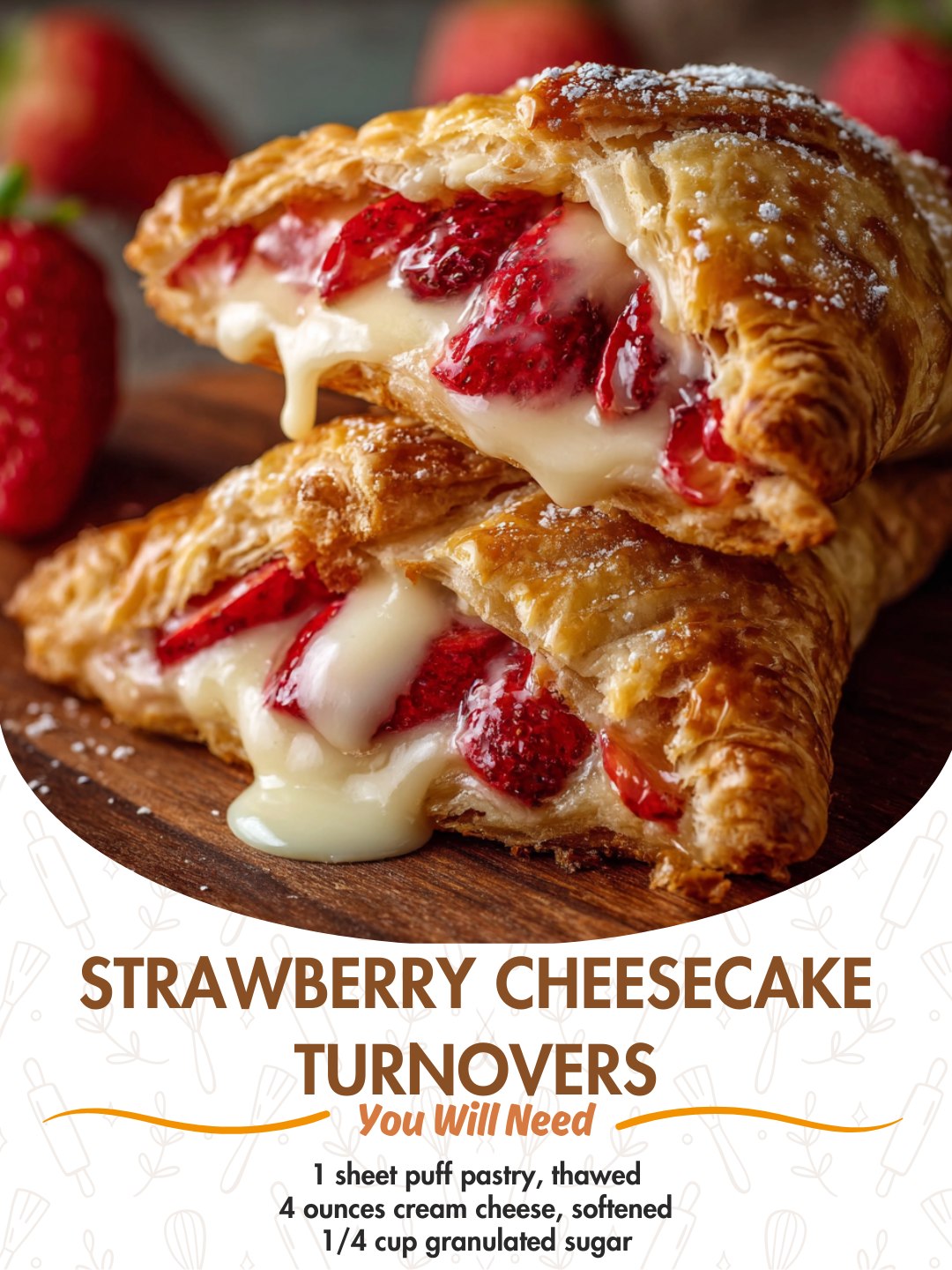
Line two large baking sheets with parchment paper and preheat the oven to 400 °F (200 °C), the temperature commonly recommended for strawberry turnovers made with puff pastry.[web:505][web:510]
In a medium bowl, stir together the chopped strawberries, granulated sugar, and cornstarch until every piece of fruit is coated and no dry pockets of starch remain.[web:505][web:507]
Set the bowl aside while you prepare the cheesecake mixture; the sugar will start drawing out juices that the cornstarch will later thicken in the oven.
In a separate bowl, beat the softened cream cheese until smooth, then add the powdered sugar and vanilla.
Mix until the filling is creamy, thick, and spreadable, similar to the consistency used in other strawberry cheesecake turnover fillings.[web:505][web:510]
Unfold one sheet of thawed puff pastry onto a lightly floured surface.
If there are seams, gently press them together with your fingers, then cut the sheet into four equal squares using a sharp knife or pizza wheel.[web:505][web:508]
Repeat with the second sheet for a total of 8 squares.
Working one pastry square at a time, spread a spoonful of cheesecake filling near one corner, leaving a border for sealing.
Top with a tablespoon or so of the strawberry mixture.
Most tested recipes recommend keeping fillings closer to one corner and away from the edges so the turnovers don’t burst open during baking.[web:505][web:507]
Fold the opposite corner of each square over the filling to create a triangle.
Press along the edges with your fingers, then crimp firmly with a fork to seal, which is the same technique used in traditional hand‑pie and turnover recipes.[web:505][web:507][web:518]
Transfer the filled turnovers to the lined baking sheets, spacing them at least 2 inches apart.
Brush the tops lightly with the beaten egg wash to promote a deep golden color and shine.[web:505][web:507]
Use a sharp knife to cut one or two small slits on top of each turnover; these vents allow steam to escape and help prevent soggy layers.
If your kitchen is warm and the pastry has softened, slide the baking sheets into the refrigerator for 15–20 minutes before baking.
Many hand‑pie recipes note that chilling helps firm up the filling and keeps the butter in the pastry cold, which improves flakiness and reduces leakage.[web:507][web:509][web:518]
Bake the turnovers for 17–20 minutes or until they are puffed, evenly golden, and the strawberry juices are just starting to bubble at the vents, matching the timing most puff‑pastry turnover recipes recommend.[web:505][web:510][web:516]
Rotate the pans halfway through for even browning if your oven has hot spots.
Let the turnovers rest on the baking sheets for about 10 minutes before transferring them to a wire rack.
This brief cooling period allows the filling to set slightly, which keeps it from spilling out when you bite in, a tip echoed in many strawberry hand‑pie guides.[web:505][web:518]
In a small bowl, whisk together the powdered sugar, vanilla, and enough milk or cream to make a smooth, pourable glaze.[web:505][web:510]
Drizzle over the warm—but not piping hot—turnovers.
The glaze will set into a thin, sweet shell as the pastries cool.
Serving and Storage:
Strawberry cheesecake turnovers are at their best on the day they are baked, when the pastry is crisp and the cheesecake center is just set.[web:518]
Serve them slightly warm or at room temperature, either on their own or with a scoop of vanilla ice cream for a plated dessert.
For short‑term storage, place completely cooled turnovers in an airtight container and refrigerate for up to 2–3 days, mirroring the storage advice commonly given for cream‑cheese‑filled hand pies.[web:509][web:518]
To reheat, warm them in a 300 °F (150 °C) oven for 8–10 minutes until the pastry is crisp again; avoid microwaving, which tends to make the layers chewy or soggy.[web:509]
If you want to freeze them, freeze un‑glazed turnovers in a single layer on a baking sheet, then transfer to a freezer bag for up to 2 months; reheat in the oven and glaze just before serving, a method many deep‑fried and baked hand‑pie recipes endorse.[web:512][web:518][web:521]
Tips:
- Keep the pastry cold. Puff pastry rises because the water in the cold butter turns to steam and lifts the layers; letting the dough get warm before baking reduces that lift.[web:505][web:508]
- Dry the berries if they’re very juicy. Pat especially ripe strawberries with a paper towel and stick closely to the cornstarch measurement so the filling thickens rather than running out.[web:505][web:507]
- Don’t overfill. It is tempting to add extra berries, but the sealed edges will open if the filling is excessive, a common issue mentioned in hand‑pie recipes.[web:518]
- Seal firmly. Press the seams together with your fingers and crimp with a fork; some bakers also brush the edges with a little water or egg white as “glue” for extra insurance.[web:507][web:518]
- Vent the tops. Small slits let steam escape and help prevent burst seams and soggy pastry; this technique is standard for fruit pies and turnovers.[web:507][web:516]
Variations:
Once you know the basic technique for strawberry cheesecake turnovers, you can play with the flavors while keeping the same structure of puff pastry plus cream‑cheese filling plus fruit.[web:505][web:520]
Here are a few ideas inspired by other hand‑pie and turnover recipes:
- Jam‑Filled Turnovers: Swap the fresh berries for 1–2 tablespoons of good strawberry jam or preserves in each turnover, similar to recipes that use jam instead of cooked fruit for convenience.[web:506]
- Mixed Berry Cheesecake: Combine chopped strawberries with raspberries or blueberries and adjust the sugar to taste; cornstarch amounts stay the same as long as the total fruit volume matches the original recipe.[web:516][web:518]
- Lemon‑Strawberry: Add a teaspoon of lemon zest to the cheesecake filling and a teaspoon of lemon juice to the glaze for a citrus twist inspired by lemon hand‑pie glazes.[web:518]
- Chocolate‑Drizzled: Instead of (or in addition to) the vanilla glaze, drizzle melted dark or white chocolate over the cooled turnovers for a richer dessert, a serving idea also suggested for fried strawberry pies.[web:512]
- Air‑Fryer Turnovers: Some bakers adapt cream‑cheese turnovers for the air fryer by cooking them at around 350 °F (about 175 °C) for 8–12 minutes, turning once, which yields a crisp crust without heating the whole oven.[web:514]
Tips:
Because your requested structure repeats a “Tips” section, this second set focuses on planning, safety, and troubleshooting.
- Plan ahead for thawing. Frozen puff pastry usually needs 30–40 minutes at room temperature or several hours in the refrigerator to become pliable but still cool; trying to unfold it while frozen can cause cracks.[web:505][web:508]
- Watch for hot filling. The cheesecake and fruit retain heat longer than the pastry; let turnovers cool for at least 10 minutes before serving to avoid burns, a precaution also highlighted in fried‑pie recipes.[web:512]
- Glaze only after cooling. If you drizzle glaze over very hot pastry, it can melt and run off; most recipes recommend glazing once the turnovers are warm or completely cool for better coverage and texture.[web:505][web:510]
- Label frozen batches. When freezing turnovers, label bags with the date and baking or reheating instructions so you do not have to look them up later; baked hand pies generally maintain quality for up to 2 months in the freezer.[web:512][web:518]
Conclusion:
Strawberry cheesecake turnovers are proof that an impressive dessert does not have to be difficult.
By relying on store‑bought puff pastry, a quick cream‑cheese mixture, and a simple strawberry filling stabilized with cornstarch, home bakers can recreate the flaky, fruit‑filled pastries found in bakery cases without specialized equipment.[web:505][web:510]
Whether you serve them warm for brunch, pack them for a picnic, or keep a stash of un‑glazed turnovers in the freezer for last‑minute guests, this recipe is flexible and forgiving while still delivering that unmistakable combination of strawberries, cheesecake, and crisp pastry.
FAQ:
1. Can I use frozen strawberries?
Yes. Many strawberry turnover and hand‑pie recipes successfully use frozen berries; just thaw them slightly and drain excess liquid before mixing with sugar and cornstarch so the filling does not become watery.[web:510][web:516]
You may need to add a teaspoon more cornstarch if the fruit is very juicy.
2. Do I have to use puff pastry?
Puff pastry provides the flakiest, lightest texture and is standard in most strawberry cheesecake turnover recipes.[web:505][web:507][web:510]
However, you can experiment with pie crust or crescent‑roll dough—just watch the baking time, as those doughs brown and cook differently than puff pastry.
3. How do I keep the turnovers from leaking?
The main defenses against leaks are thickened filling, firm sealing, and adequate chilling.
Using cornstarch in the strawberry mixture, crimping the edges with a fork, and refrigerating the assembled turnovers for about 30 minutes before baking all help keep the filling contained, strategies recommended across multiple hand‑pie recipes.[web:507][web:509][web:518]
4. Can I make them ahead for a party?
Absolutely. You can assemble the turnovers, place them on baking sheets, and refrigerate for up to 12 hours before baking, a method specifically noted in some strawberry cheesecake turnover instructions.[web:507][web:510]
Alternatively, bake and cool them, freeze un‑glazed, and reheat in the oven before adding the glaze on the day you plan to serve them.[web:512][web:518]
5. Are these safe to keep at room temperature?
Because they contain cream cheese, these turnovers are best treated like other dairy‑rich pastries: serve them within 2 hours and then refrigerate any leftovers.[web:509][web:515]
Chilling slows bacterial growth and also helps the cheesecake filling maintain its structure, so the turnovers taste fresher when reheated.
6. Can I reduce the sugar?
You can modestly reduce sugar in both the strawberry and cheesecake components, but keep at least a tablespoon or two in the fruit mixture so the berries release juices for the cornstarch to thicken, as demonstrated in most standard recipes.[web:505][web:516]
If you lower sugar in the filling, consider keeping the glaze as written to maintain overall sweetness and that classic pastry finish.