
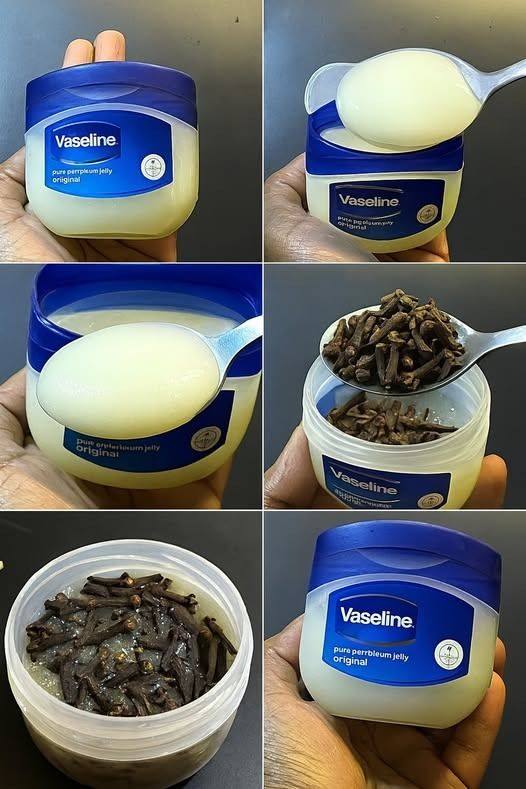
At first glance, cloves and petroleum jelly might seem like an unlikely pairing. One is a fragrant spice often associated with baking and traditional medicine; the other is a classic household product used for moisturizing and protection. Yet when combined, they create a multi-purpose natural balm that has been quietly used in many cultures for decades.
This simple mixture is affordable, easy to make at home, and useful in ways that go far beyond what most people expect. Let’s break down why this combo works, how to prepare it safely, and what it can be used for—with science and common sense behind every claim.
Why Cloves Are So Powerful 🌿
Cloves come from the dried flower buds of the Syzygium aromaticum tree and are rich in eugenol, a compound known for:
-
Antibacterial and antifungal properties
-
Mild natural anesthetic (numbing effect)
-
Anti-inflammatory action
-
Strong insect-repellent scent
For centuries, cloves have been used in traditional medicine for oral care, skin issues, pain relief, and preservation.
Why Petroleum Jelly Is the Perfect Base 🧴
Petroleum jelly (like Vaseline) is not a moisturizer in itself—but it’s an excellent occlusive. That means it:
-
Locks moisture into the skin
-
Creates a protective barrier
-
Slows evaporation and dryness
-
Helps active ingredients stay in place longer
When cloves are infused into petroleum jelly, their beneficial compounds are released slowly and gently, making the mixture both effective and skin-friendly.
How to Make Clove-Infused Petroleum Jelly (Step-by-Step)
You’ll Need:
-
1 small jar of pure petroleum jelly
-
1–2 tablespoons whole cloves or ground cloves
-
A heat-safe bowl or spoon
-
Optional: fine strainer or cheesecloth
Method 1: Slow Infusion (Best & Gentle)
-
Slightly warm the petroleum jelly (do not boil).
-
Add crushed or whole cloves.
-
Let the mixture sit for 24–48 hours, stirring occasionally.
-
Strain out cloves if desired.
-
Store in a clean, airtight container.
Method 2: Quick Heat Method
ADVERTISEMENT
