
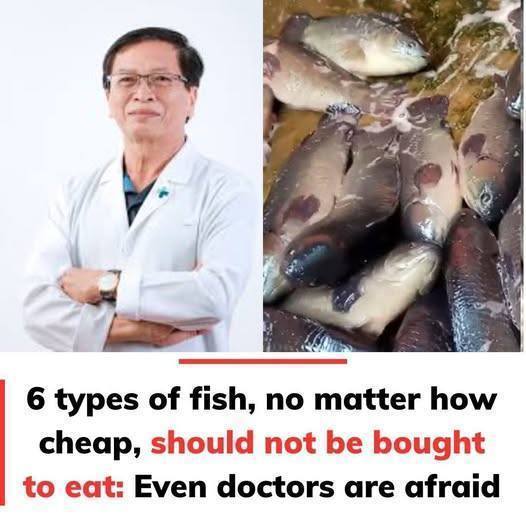
Even when they’re affordable and easy to find, some fish can seriously harm your health.
Fish is often praised as a healthy, protein-rich food full of omega-3 fatty acids. But here’s the uncomfortable truth: not all fish is safe. Pollution, poor farming practices, heavy metals, and toxins mean that some fish can do more harm than good—especially when eaten regularly.
Below are 6 types of fish experts, doctors, and food safety authorities repeatedly warn against, no matter how low the price or how tempting the deal.
1. Shark – Extremely High in Mercury
Shark meat may be considered a delicacy in some cultures, but it comes with a dangerous downside.
Why it’s risky:
-
Sharks sit at the top of the food chain
-
They accumulate very high levels of mercury
-
Mercury exposure can damage:
-
The brain and nervous system
-
Memory and concentration
-
Fetal development during pregnancy
-
Who should avoid it completely:
-
Pregnant women
-
Children
-
Older adults
👉 Even occasional consumption can raise mercury levels to unsafe ranges.
2. King Mackerel – A Hidden Mercury Bomb
Not to be confused with Atlantic or Spanish mackerel (which are safer), king mackerel is a different story.
The danger:
-
One of the highest mercury concentrations among commonly sold fish
-
Regular consumption linked to:
-
Neurological symptoms
-
Increased cardiovascular risk
-
Health agencies say:
-
Avoid entirely, especially if you eat fish more than once a week
3. Tilefish – Banned in Some Regions for a Reason
Tilefish is often sold cheaply and marketed as mild and tasty—but it’s one of the most contaminated fish available.
What makes it dangerous:
-
Extremely high mercury levels
-
Long lifespan = more toxin accumulation
-
Linked to:
-
Cognitive decline
-
Hormonal disruption
-
📌 Many food safety agencies rank tilefish at the very top of “do not eat” lists.
4. Farmed Catfish (Poorly Regulated Sources)
ADVERTISEMENT
