
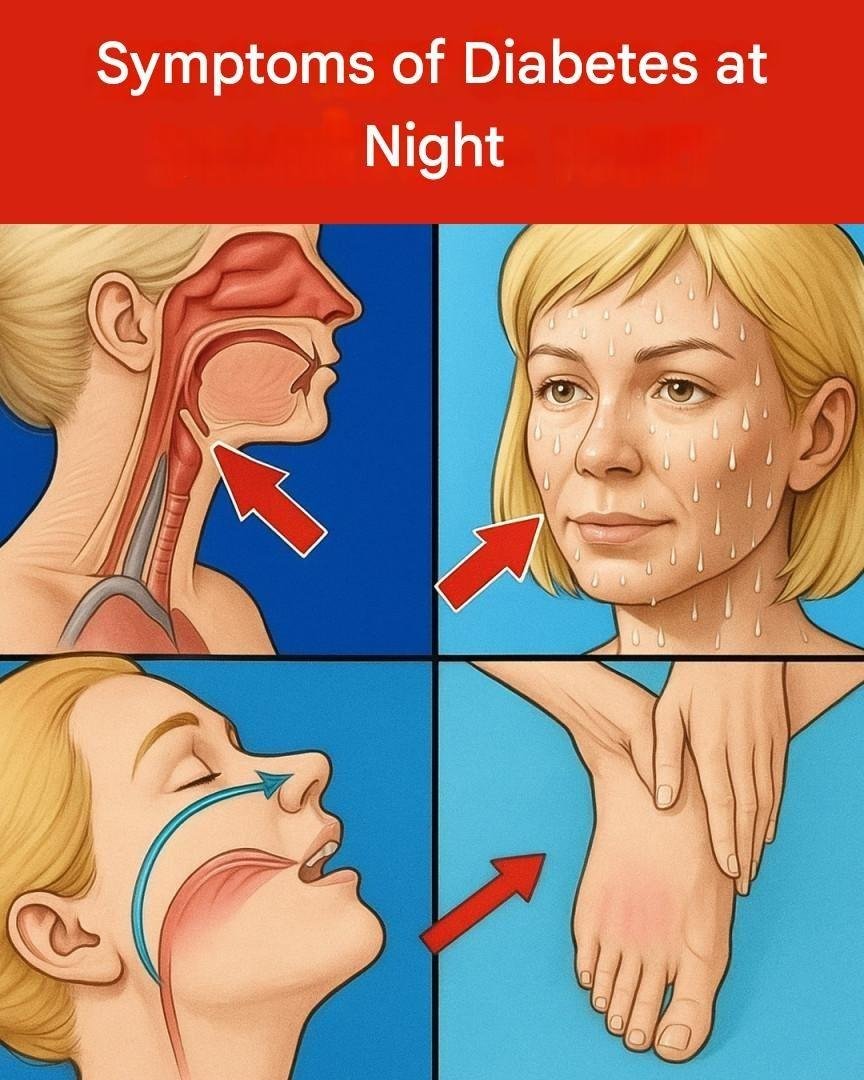
Diabetes can affect the body at any time of day, but for many people, the symptoms become more noticeable at night. When blood sugar levels rise or fall while you sleep, the body responds with signals that can interrupt rest, cause discomfort, and impact overall health. Recognizing these nighttime symptoms early can help prevent complications and encourage timely medical attention.
Below are the most common nighttime symptoms associated with diabetes and what they may indicate.
1. Excessive Thirst or Dry Mouth (Nocturnal Polydipsia)
One of the earliest and most common signs of elevated blood sugar at night is waking up with:
-
A very dry mouth
-
Intense thirst
-
The need to drink water repeatedly
When blood glucose levels are high, the body tries to flush out the excess sugar through urine. This leads to dehydration, which often becomes more noticeable after lying down for hours.
2. Night Sweats and Excessive Perspiration
Waking up covered in sweat — even when the room is cool — can be linked to:
Low blood sugar (hypoglycemia)
This can occur if:
-
You took insulin or medication too close to bedtime
-
You skipped dinner
-
You exercised late in the evening
Low blood sugar triggers the body’s “fight or flight” response, releasing stress hormones that cause sweating, trembling, and restlessness.
3. Difficulty Breathing or Snoring (Sleep Apnea Related to Diabetes)
People with diabetes — especially type 2 — are at higher risk of sleep apnea, a condition where breathing repeatedly stops and starts during sleep.
Signs include:
-
Loud snoring
-
Waking up gasping for air
-
Morning headaches
-
Constant fatigue
Sleep apnea worsens blood sugar levels and increases the risk of heart issues, making it important to address.
4. Numbness, Tingling, or Burning in the Feet (Peripheral Neuropathy)
Diabetic nerve damage often becomes more noticeable at night because there are fewer distractions.
Symptoms may include:
-
Tingling or “pins and needles”
-
Burning sensation
-
Numbness
-
Pain in the legs or feet
This discomfort can make falling or staying asleep difficult. Early detection is crucial because neuropathy can worsen over time if untreated.
