
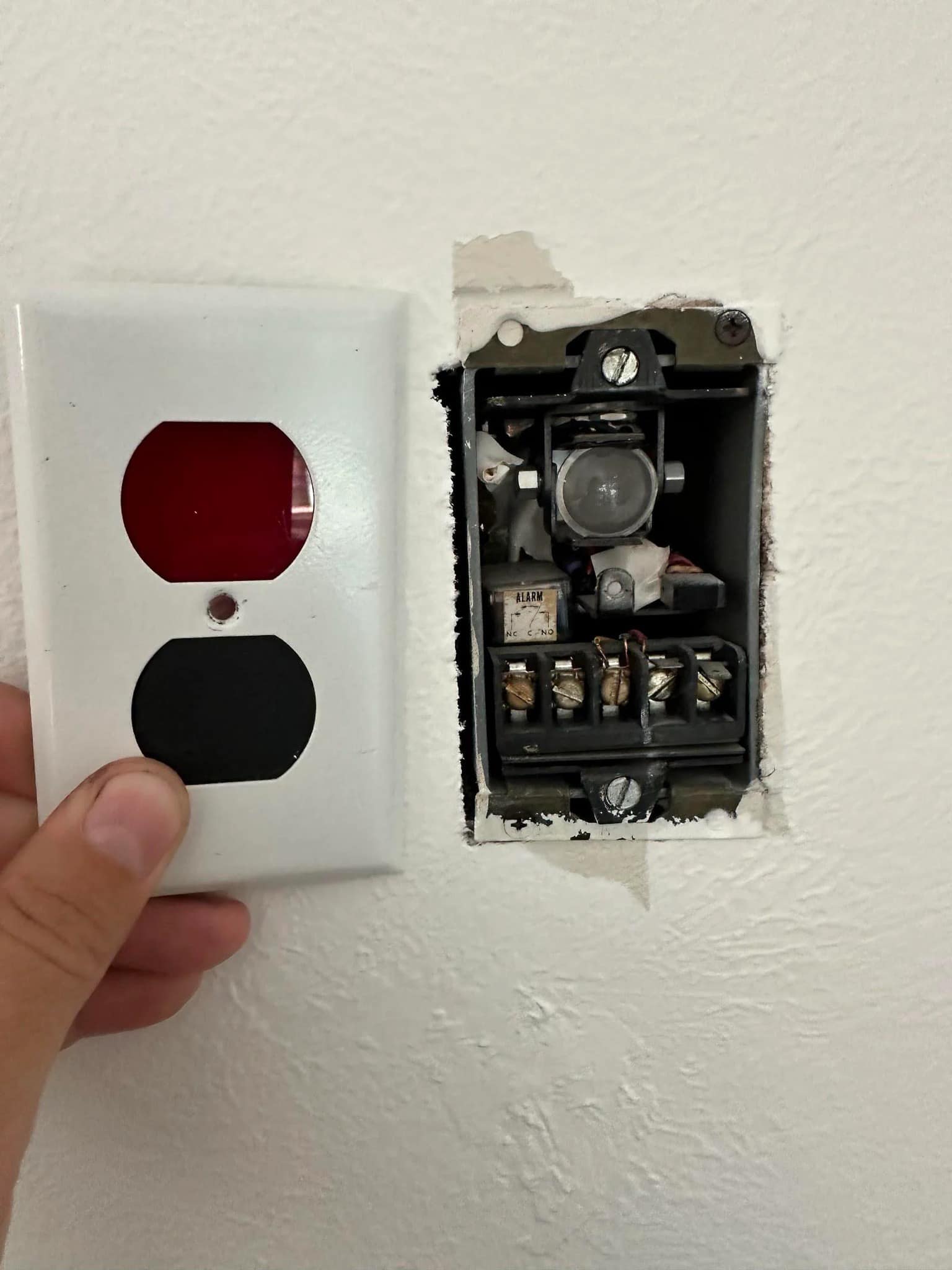
In many older homes, builders or alarm companies installed low‑voltage modules in single‑gang boxes, then covered them with specialty plates instead of ordinary outlets. The red and black sections might have been:
-
Visual indicators for alarm “armed/tripped” states or emergency buttons
-
A passive infrared or photoelectric element that could see through the colored plastic to detect motion or a remote signal
Because this wiring is low‑voltage signal wire, it is not intended for 120/230‑volt power circuits and should never be converted directly to a regular receptacle without replacing the cable and box with code‑compliant electrical materials.
Practical tips if you find one in your wall
-
Do not assume it’s dead. Even low‑voltage lines can still be connected to a powered alarm panel or transformer elsewhere in the house. If possible, locate any old alarm cabinet or plug‑in power supply and unplug or shut it off before working on the wiring.
-
Document before changing anything. Take close photos of wire colors and terminal labels (“ALARM,” “+,” “–,” etc.) in case you or a future owner want to reconnect or repurpose the cabling.
-
Cap and label the wires. If you don’t plan to use the system, disconnect the conductors at the far end, twist on small wire nuts or wrap each stripped end with electrical tape, and label the bundle (for example, “old alarm line, living room”) before tucking it back into the box.
-
Hide it cleanly. The simplest cosmetic fix is to install a smooth blank low‑voltage plate; that preserves access to the wiring and avoids patching drywall if you might use the cable later for a new alarm or smart‑home sensor.
-
Only convert to a power outlet with proper work. To turn this spot into a real receptacle or switch, a licensed electrician should pull new, correctly rated cable from a suitable junction or panel, install an appropriate electrical box, and terminate it to meet local code.
ADVERTISEMENT
