
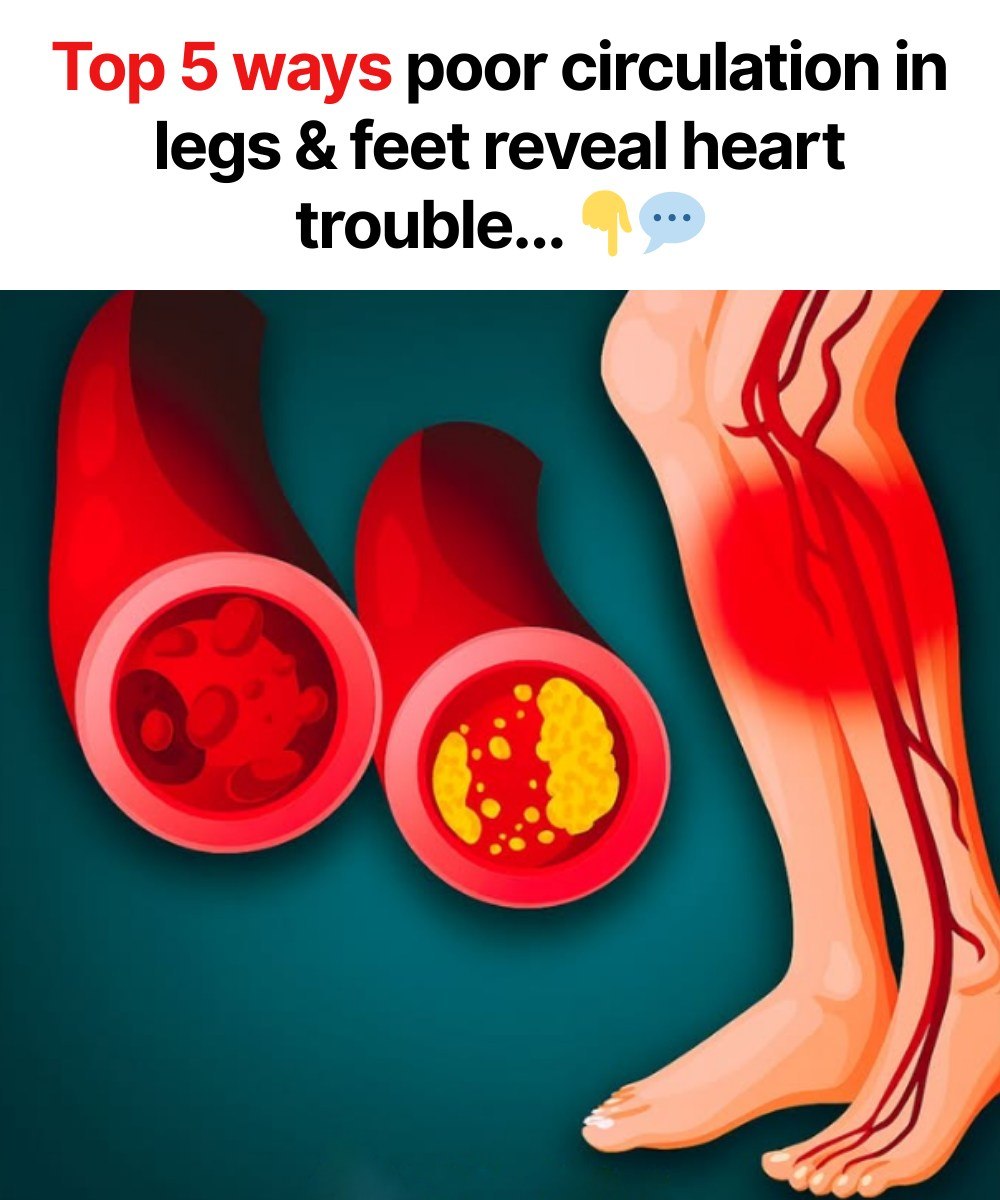
Poor circulation in the legs and feet – often from peripheral artery disease (PAD) – shares the same root cause as heart disease: atherosclerosis, where plaque narrows arteries throughout the body. PAD is a strong warning sign of heart trouble because the same blockages can affect coronary arteries, raising risks of heart attack and stroke. Here are the top 5 ways leg/foot circulation problems reveal potential heart issues, ranked by how commonly specialists highlight them.
1. Leg pain or cramping when walking (claudication)
The classic PAD symptom is aching, cramping, tiredness, or burning in the calves, thighs, hips, or buttocks during walking or exercise, which stops within minutes of rest. Muscles demand more blood flow during activity, but narrowed leg arteries can’t deliver it.
This matters for heart health because PAD means widespread atherosclerosis – the same process clogs heart arteries. Up to 50-70% of PAD patients have coronary artery disease, even if asymptomatic. Early claudication signals you need heart screening (e.g., stress test, cholesterol check).
2. Slow-healing sores or ulcers on feet/toes
Cuts, scrapes, or blisters on the feet that won’t heal – or heal very slowly – indicate poor blood delivery for tissue repair. In PAD, reduced oxygen and nutrients starve wounds, risking infection or gangrene.
Heart connection: PAD triples heart attack/stroke risk; non-healing wounds show advanced atherosclerosis affecting multiple vessels. CDC and AHA note this as a critical sign needing urgent vascular/heart evaluation.
3. Cold, numb, or discolored legs/feet
One or both legs/feet feeling cooler than the rest of the body, turning pale/bluish when elevated, or reddish when dangling signals severe flow restriction. Numbness or weak pulses in feet confirm it.
Why heart-related: Asymmetric cooling (one leg worse) or progressive numbness reflects systemic plaque buildup, mirroring coronary risks. Mayo Clinic emphasizes this as a late PAD sign but early systemic atherosclerosis marker.
4. Hair loss, shiny skin, or slow toenail growth on legs/feet
Chronic poor circulation starves hair follicles and skin, causing leg hair loss (especially shins), shiny/smooth skin, brittle/slow-growing toenails, or muscle wasting. Skin may look pale, tight, or bluish.
Cardiac link: These visible changes indicate long-term low flow from atherosclerosis, the #1 heart disease cause. AHA lists them as PAD red flags signaling 2-4x higher cardiovascular death risk.
